3How to Calculate Average in Excel
1Identify Your Data
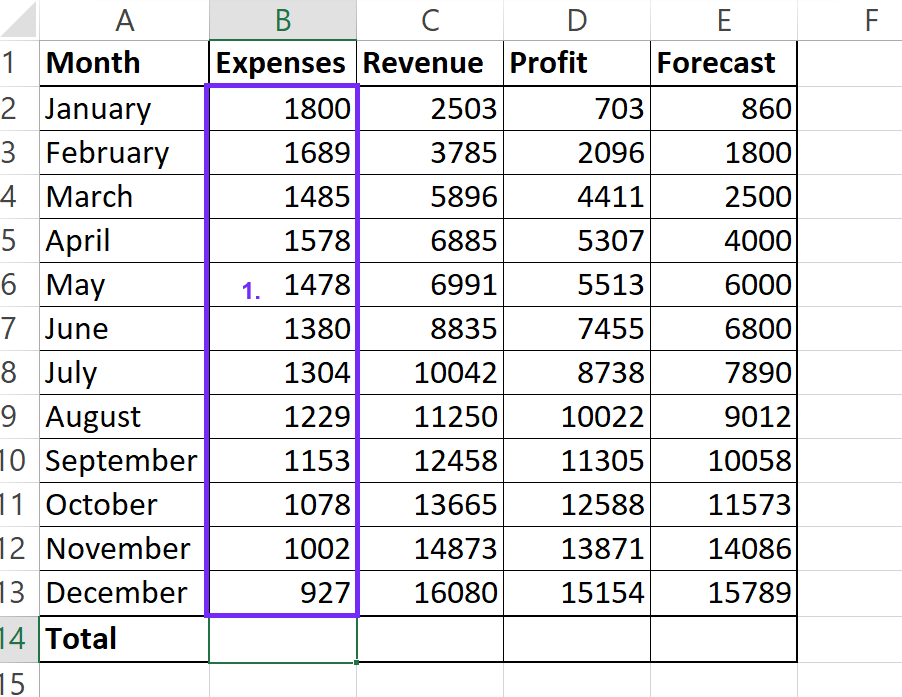
2Select the Output Cell
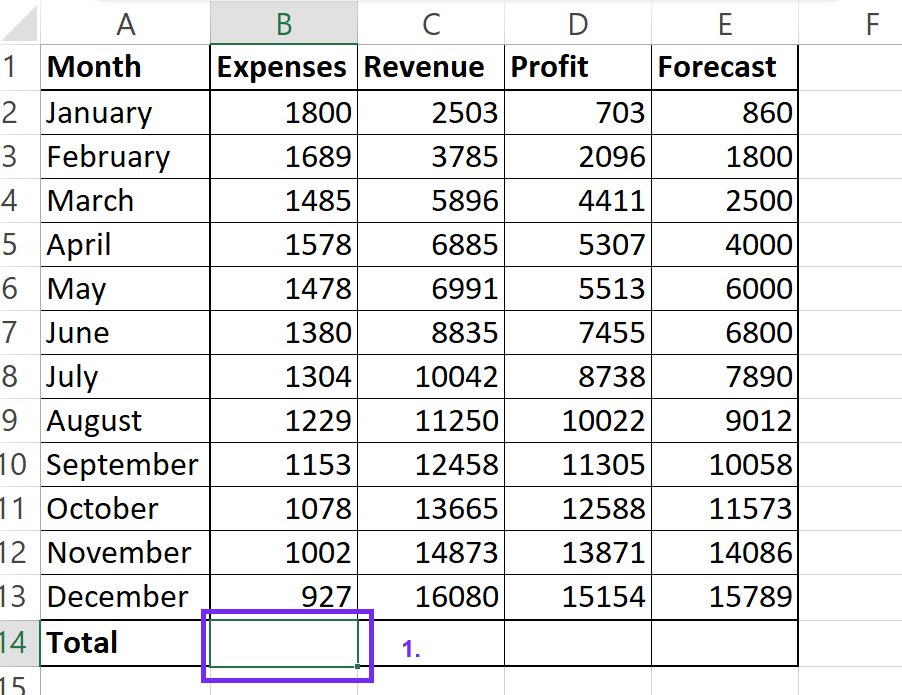
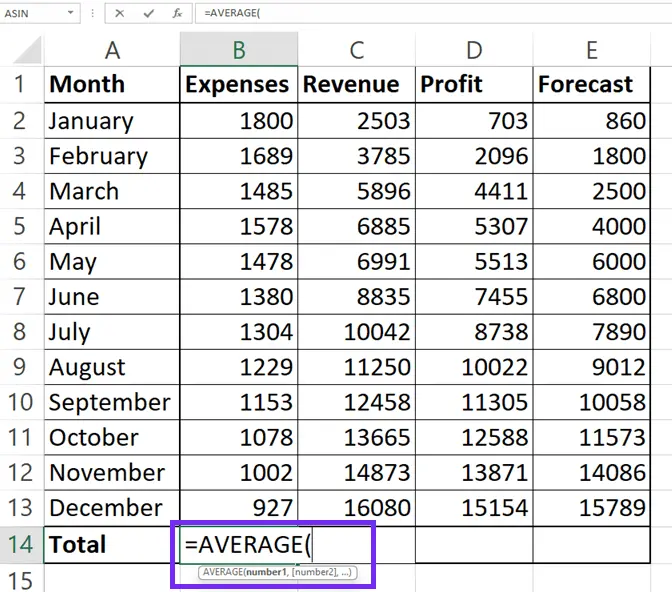
3Enter the Formula
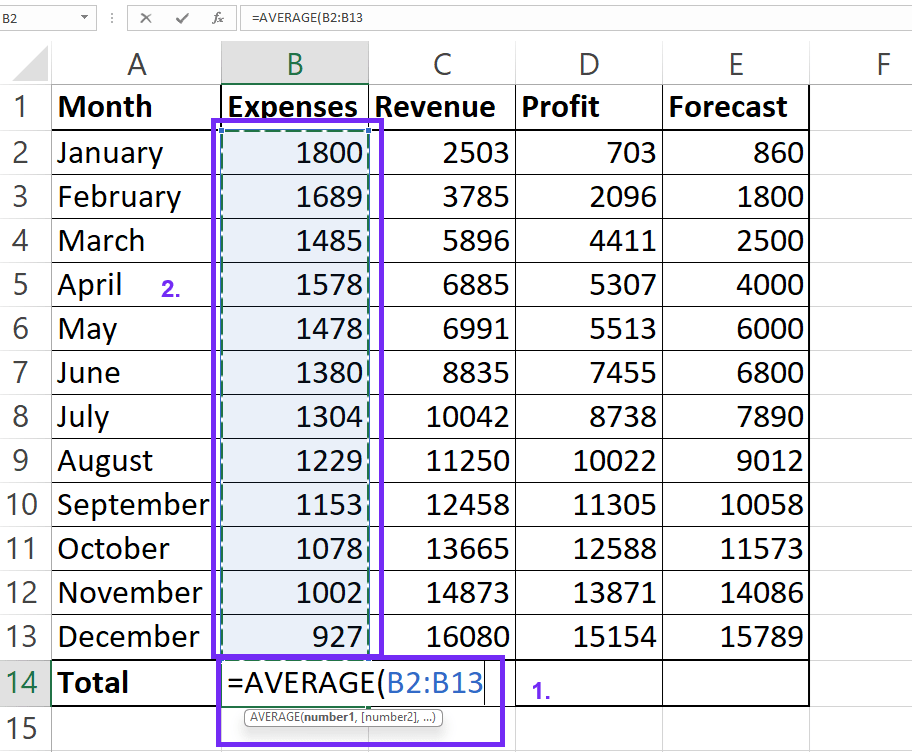
4Select the Range
5Close & Execute
Skip the manual work
4Calculating Averages Across Multiple Ranges
For non-adjacent cells in the same row, you can also use:
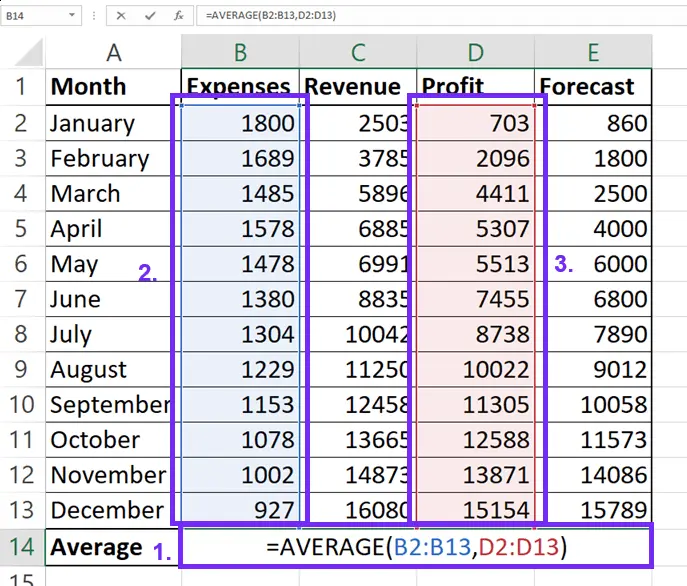
Multiple Ranges
You can include up to 255 different ranges in a single AVERAGE formula, making it perfect for scattered data analysis.
5Averaging an Entire Column
Dynamic Updates
This formula automatically updates when you add new data to the column. Perfect for growing datasets!
6AVERAGEIF Function (Single Criterion)
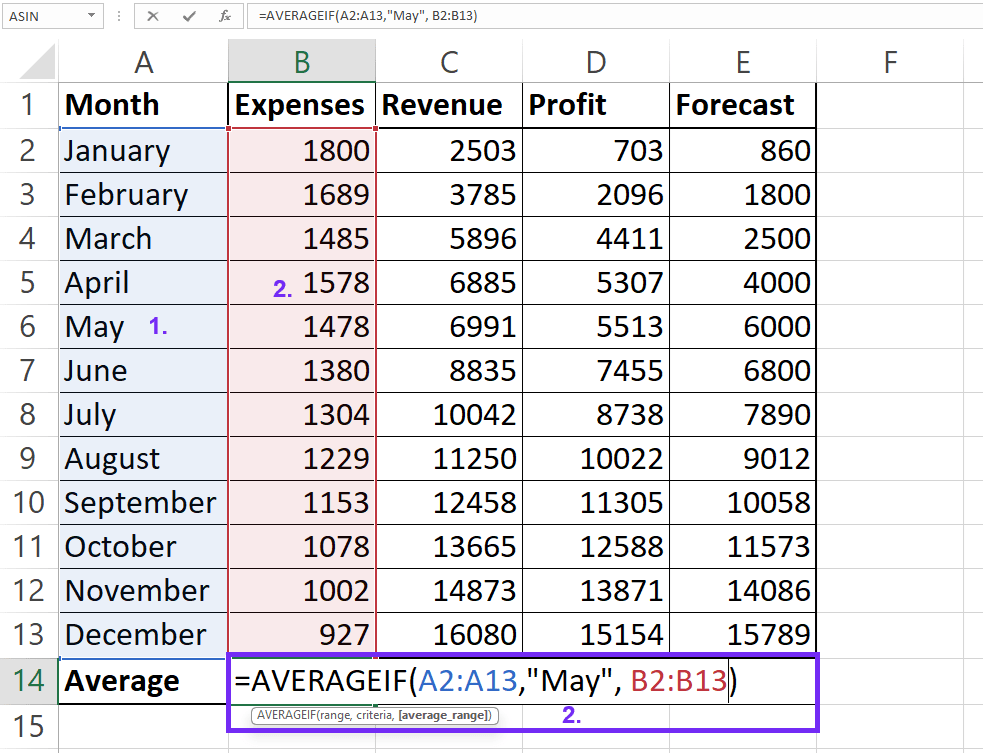
Example: To average values in column B where column A contains “May”:
| Argument | Description |
|---|---|
range | The range of cells to evaluate against the criteria
|
criteria | The condition that must be met (e.g., “May”, “>100”)
|
average_range | The actual cells to average (optional if same as range)
|
7AVERAGEIFS Formula(Multiple Criteria)
Example: To average values in column C where column A is “May” AND column B is “Project B”:
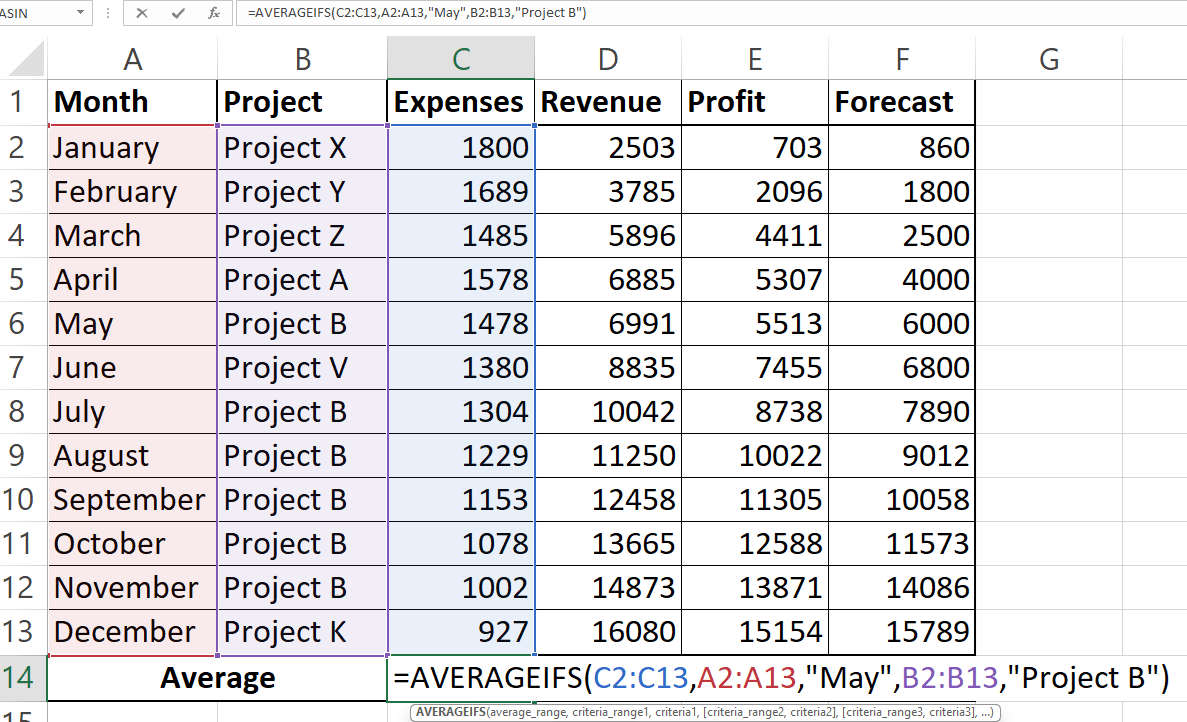
Note the Difference
In AVERAGEIFS, the average_range comes FIRST, unlike AVERAGEIF where it comes last. This is important to remember!
8Quick Average Using the Status Bar
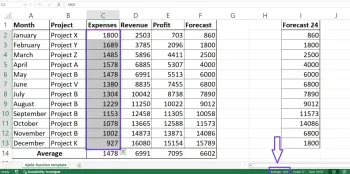
1Select your data
2Check the Status Bar
This is a quick way to find the average without needing to enter a formula into a cell.
Download Free Excel Template
Practice AVERAGE formulas with our ready-made template. Includes examples for basic averages, AVERAGEIF, AVERAGEIFS, and multiple ranges.