Top 5 Enterprise AI Platforms Now (Reviewed By AI Experts)

Despite so many enterprise AI platform options being available, there’s a lack of control and management of AI usage. When searching for enterprise AI, you should be looking at which platforms perform as an operational layer.
To guide you in making the right choice, our team of AI experts have compiled a list on the leading enterprise AI platforms.
Let’s dive in.
What Is An Enterprise AI Platform
An enterprise AI platform is a software layer for a company, which lets you build, deploy, run and govern artificial intelligence such as AI agents, bots, and automation workflows. These platforms connect your entire organization, including your data, systems, people and processes with AI.
It’s important to know the difference between tools and platforms. A platform is an environment where multiple components, services, and workflows work together. A tool does one specific task well.
Switching platforms usually requires extensive migration processes that consume a lot of time and resources, as your data, workflows, and integrations become entangled with it. Tools on the other hand are easier to adopt and replace.
The best enterprise AI agent platform for your business should include:
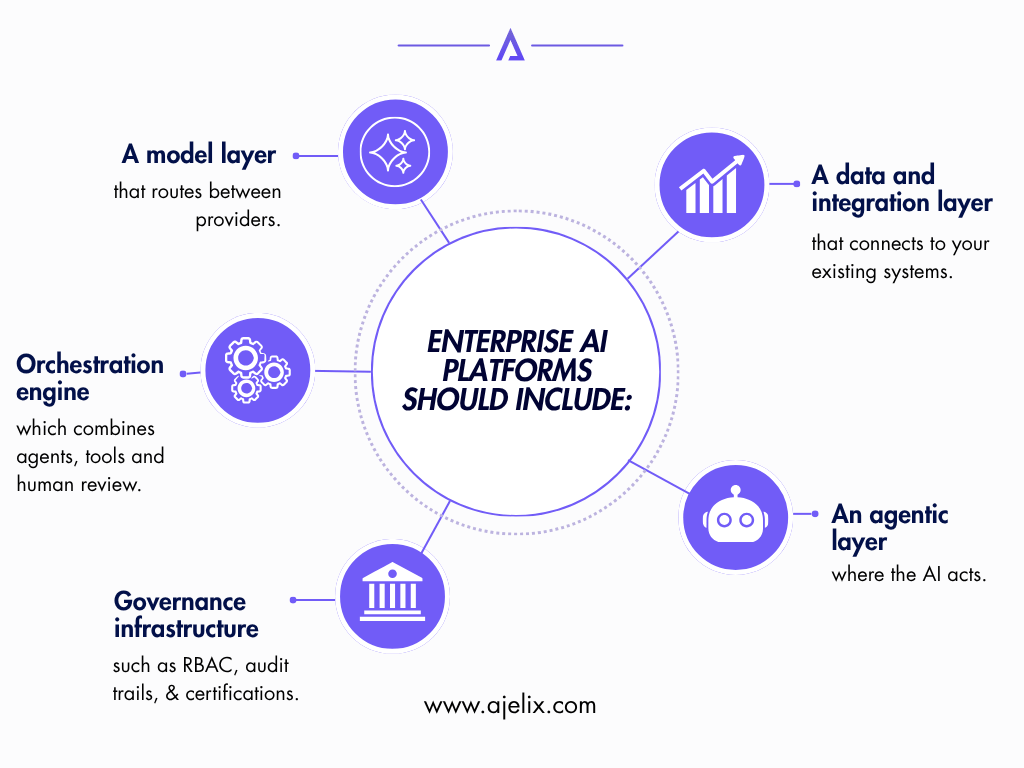
- A model layer that routes between providers, hosts open-source LLMs, or accepts your own API key;
- A data and integration layer that connects to your existing systems, files and databases;
- An agentic layer where the AI acts across tools and workflows;
- Governance infrastructure, such as role-based access control, audit trails, compliance certifications and options for data residency;
- An orchestration engine, which combines agents, tools and human review into workflows.
If you come across a product that refers to itself as an enterprise AI platform, but is missing any of these crucial components, it’s either an incomplete platform, a tool or an API service.
Why Do You Need Enterprise AI
88% of organizations use AI now to at least some degree. Those who go further and deploy AI at scale are seeing significant impact. It’s better to start researching your options now, as in a few months, you might be behind your competitors who are already in talks.
AI isn’t going anywhere, but only progressing in its power and capability. And it’s been proven to work and improve business processes. Deloitte’s survey earlier this year found that of 3,235 company leaders, 74% of them achieved positive ROI from AI within the first year, as well as 66% reported productivity gains.
The companies achieving these results aren’t just using a few AI tools, but have AI deeply ingrained into all their processes.
What Makes A Platform “The Best”: Our Evaluation Criteria
We evaluated every platform against four criteria to establish which are the best ones. You can refer to this criteria when evaluating what’s important in your company’s case:
- Enterprise Readiness & Governance. Does the platform have the needed compliance certifications, hybrid deployment options, access controls and audit infrastructure? A platform can’t be enterprise-ready without any of these.
- AI Capability. Does the platform cover a width of AI options, including generative AI, agentic execution, data analytics, and RAG/semantic search? As established in our article on leading enterprise AI solutions, all of these are necessary for an enterprise platform.
- Data & Ecosystem Integration. Does the platform connect to your existing data, systems and external tools? Either through API keys or native integrations.
- Cost transparency. Does the pricing stay predictable even if usage grows over time? Can you connect the platform to self-hosted LLMs for more control and customization?
Our core question throughout choosing the platforms was: would we recommend this to our enterprise clients?
Top 5 Enterprise AI Platforms Now
Here is an overview of the five best enterprise AI platforms now:
| Platform | Best For | Key Features | Pricing Model |
|---|---|---|---|
| Ajelix Enterprise | Custom agentic operations across all departments | Custom agents and workflows, RAG based on company data, RBAC and audit logs, self-hosted LLM support, third-party API integrations | Custom enterprise contract |
| Cohere | Regulated industries requiring data sovereignty and enterprise-grade RAG | VPC or on-premises deployment, full compliance | Enterprise sales-led |
| Databricks | Data engineering and analytics teams needing unified data + AI | Lakehouse architecture, Mosaic AI, Agent Bricks, Unity Catalog governance | Consumption-based (DBU billing) |
| ChatGPT Enterprise | Knowledge-work teams seeking fast, broad AI adoption | Custom GPTs, admin SSO and controls, enterprise connectors, strong general-purpose model quality | Per-seat enterprise contract |
| Amazon Bedrock | AWS-native enterprises wanting serverless multi-model AI | 100+ foundation models, Bedrock Agents, Bedrock Knowledge Bases for RAG, Bedrock Guardrails, deep AWS integration | Pay-as-you-go (per token) |
Some immediate insights from the table:
- Every platform has a different core strength: Ajelix is the leading platform for agentic operations, Cohere for data sovereignty, Databricks on unified data, ChatGPT Enterprise for broad adoption, and Bedrock for multi-model flexibility.
- Per-seat pricing is good for stable and predictable teams whose usage wouldn’t grow over time. Consumption-based pricing is a good fit for teams with light usage. Custom enterprise contracts are meant for teams who are ready to adapt based on their AI usage needs, keeping a transparent and predictable pricing.
- Cloud-first platforms might not be the best fit for enterprises in regulated industries.
Below, we cover what an enterprise generative AI platform does well, what not so much, and who they’re built for.
1. Ajelix Enterprise
Who is it for? Business teams and enterprises that need a fully compliant AI agent platform with custom agents, workflows and easy API integration to any external tool, platform and LLM.
- Pros: Their Enterprise plan is fully enterprise-compliant with granular RBAC, full audit trail and reasoning logs, usage monitoring and quota management. The custom agents and connectors are built around your company’s processes. Offers ability to self-host LLMs and connect to any third-party API or LLM provider.
- Cons: Run by a smaller team than giants like Amazon and OpenAI.
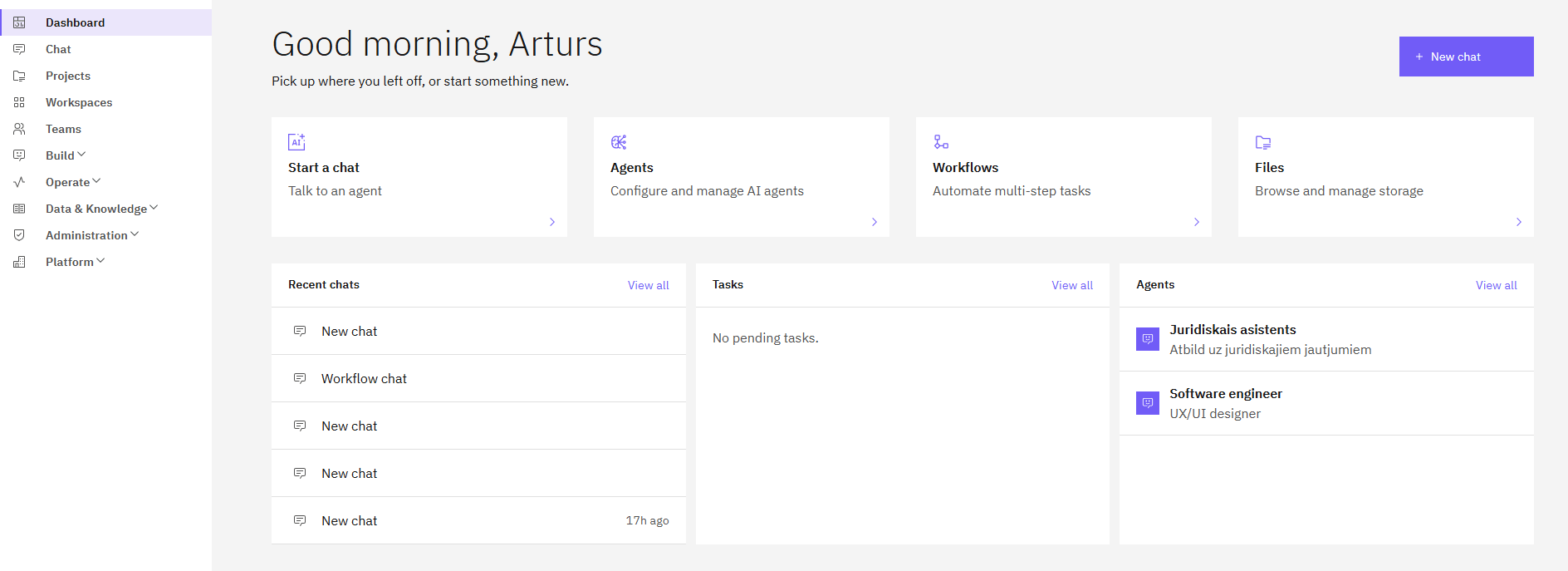
Ajelix is built as an operational layer for enterprise AI. Granular role-based access ensures employees work within their permissions, guardrails, a full audit trail for every agent and employee action. Usage monitoring with quota management by project or team keeps the platform under your control.
Custom agents and connectors are built around your company’s specific workflows. A RAG system trained on your company’s documentation guides the AI to carry out processes that match your company’s standards or knowledge.
Ajelix offers the options to self-host your own LLMs, ready to deploy on kubernetes, and connect to any third-party source easily through an API key (including any LLM provider).
Ajelix works with clients independently to customize workflows and make the company AI-native, regardless of industry. Pricing is a transparent custom enterprise contract, tailored to team size and the scope of the deployment. Contact the team for a quote.

2. Cohere
Who is it for? Organizations in regulated industries that require enterprise-grade generative AI with strict data sovereignty and compliance.
- Pros: Built exclusively for enterprises; private VPC, on-premises, and multi-cloud deployment options.
- Cons: Doesn’t include image, audio, or video generation; as it’s meant specifically for large enterprises, the pricing is undisclosed but high.
As Cohere was built to be an AI platform for enterprises, it shows through their model architecture, deployment infrastructure and compliance. Cohere holds SOC 2 Type II, ISO 27001, HIPAA, GDPR, and CCPA certifications.
Its model, Command A, is built for document-heavy and intense workloads that are common in regulated industries. Deployment options are between Cohere’s own managed cloud, your own private VPC, multi-cloud environments, and on-premises. Their North product brings the agentic AI elements, while Compass is responsible for AI-powered enterprise search.
Cohere is not the best fit for smaller teams or experimentation. It’s a big commitment, both in cost and implementation.
3. Databricks
Who is it for? Data engineering and analytics teams at large enterprises, who need a single governed platform for data pipelines, ML models, and production AI agents.
- Pros: Unified lakehouse architecture for data engineering, analytics, and AI; Mosaic AI for building, fine-tuning, and serving production ML models; Agent Bricks for enterprise AI agents grounded in your own governed data; Unity Catalog for cross-cloud governance and access control; Genie for natural-language analytics.
- Cons: Requires experienced data engineers to operate effectively; better suited for data-science-heavy organizations than business teams without technical depth; not a no-code or general-purpose enterprise AI chatbot platform.
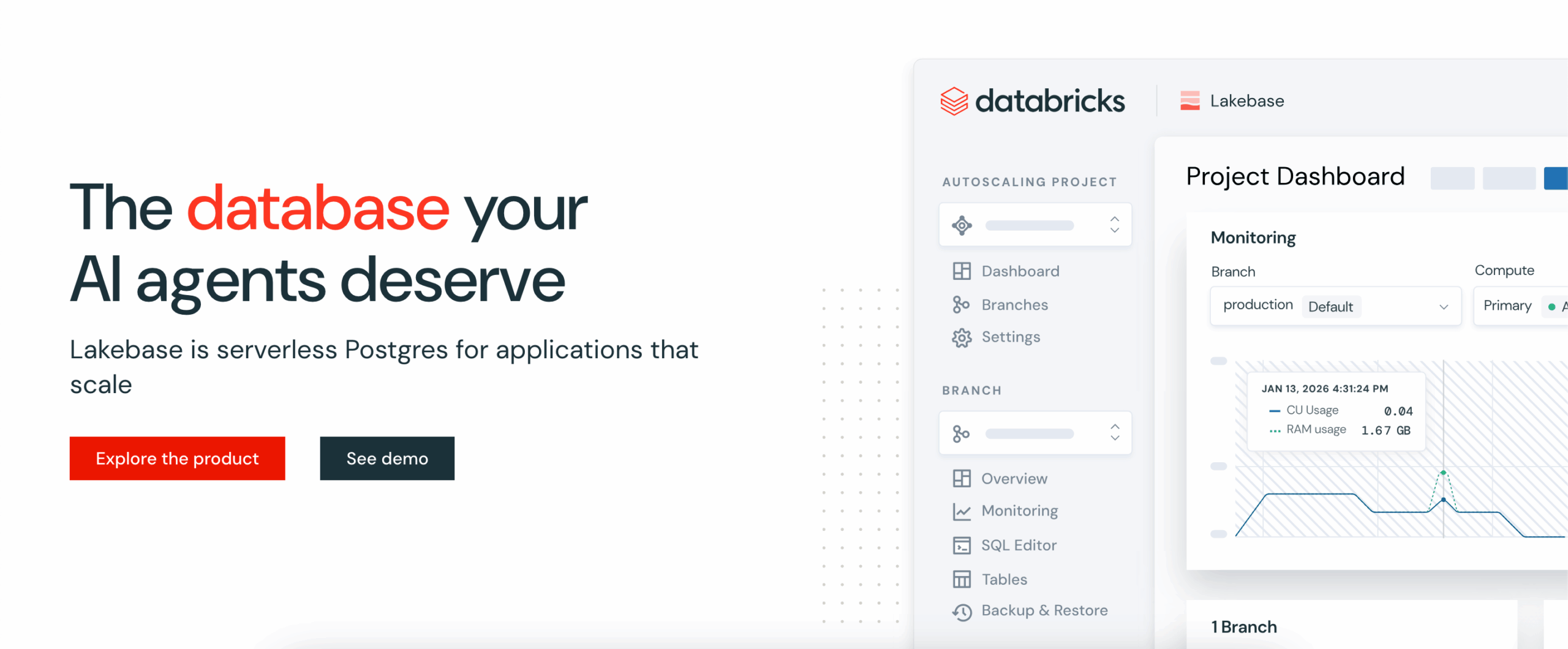
If the pros list didn’t make much sense, Databricks might not be the right fit for your needs.
Databricks originated as a lakehouse platform, where data architecture merges the flexibility of a data lake with the governance of a warehouse. For enterprises that have built their data engineering practices on Databricks already, implementing their AI aspect is the right choice.
Their Unity Catalog applies consistent access controls, data lineage, and governance across multiple clouds simultaneously. Genie, Databricks’ natural-language analytics product, lets analysts ask questions using governed data.
Databricks is incredibly capable, but only if your engineering team is, too. If your AI strategy requires agents operating on complex, high-volume enterprise data under strict governance, Databricks is one of the most credible platforms. If you need a platform your operations team can use without engineering support, look at other options.
4. ChatGPT Enterprise
Who is it for? Knowledge-work teams and organizations that want fast, broad AI adoption across writing, research, analysis, and communication.
- Pros: Has the fastest onboarding on our list; strong general-purpose models; a good entry point for AI implementation in your company, as most AI users are already familiar with ChatGPT.
- Cons: Better for assistance than autonomous end-to-end execution; cloud-only deployment.
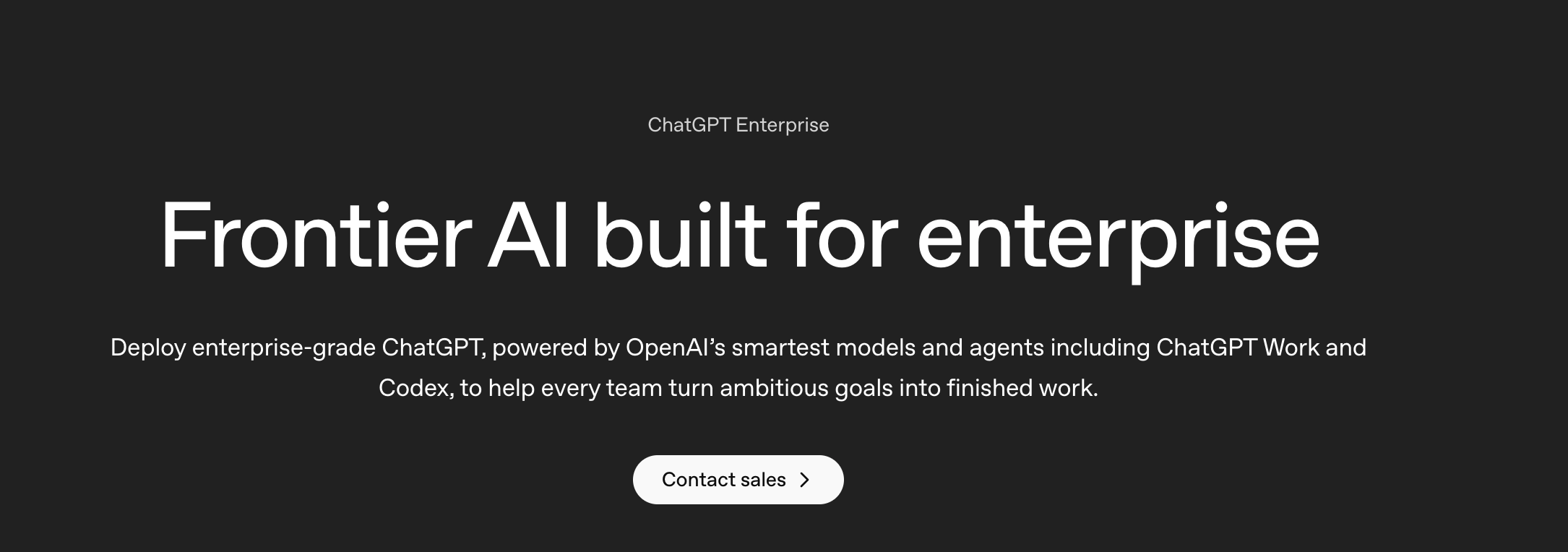
Because most employees have already used ChatGPT personally, training for enterprise adoption is minimal. OpenAI uses that familiarity to have grown into an enterprise-ready platform. It has the required data privacy, SSO and Custom GPT’s, which let departments create custom AI assistants for any use case they need.
ChatGPT has native integrations with Microsoft 365, Google Workspace, Slack, GitHub, Confluence, making it useful for document drafting, research synthesis, email writing, and summarization workflows.
However, it is still rather a generative AI platform for enterprise, lacking the power of a truly agentic platform. Teams looking for agents that act without back-and-forth prompting, process structured data autonomously, or build and deploy internal applications will need a different platform.
ChatGPT is seen as rather a first step into AI implementation than what your company will be using forever.
5. Amazon Bedrock
Who is it for? Enterprises already using AWS that also want serverless access to multiple foundation models.
- Pros: Serverless, meaning there’s no GPU infrastructure to manage; access to 100+ foundation models from Anthropic, Meta, Mistral, and more; Bedrock Agents for multi-step agentic workflows; Bedrock Guardrails for content filtering and hallucination detection.
- Cons: Works best for teams already using AWS in their processes; requires AWS/cloud expertise for setup and optimization.
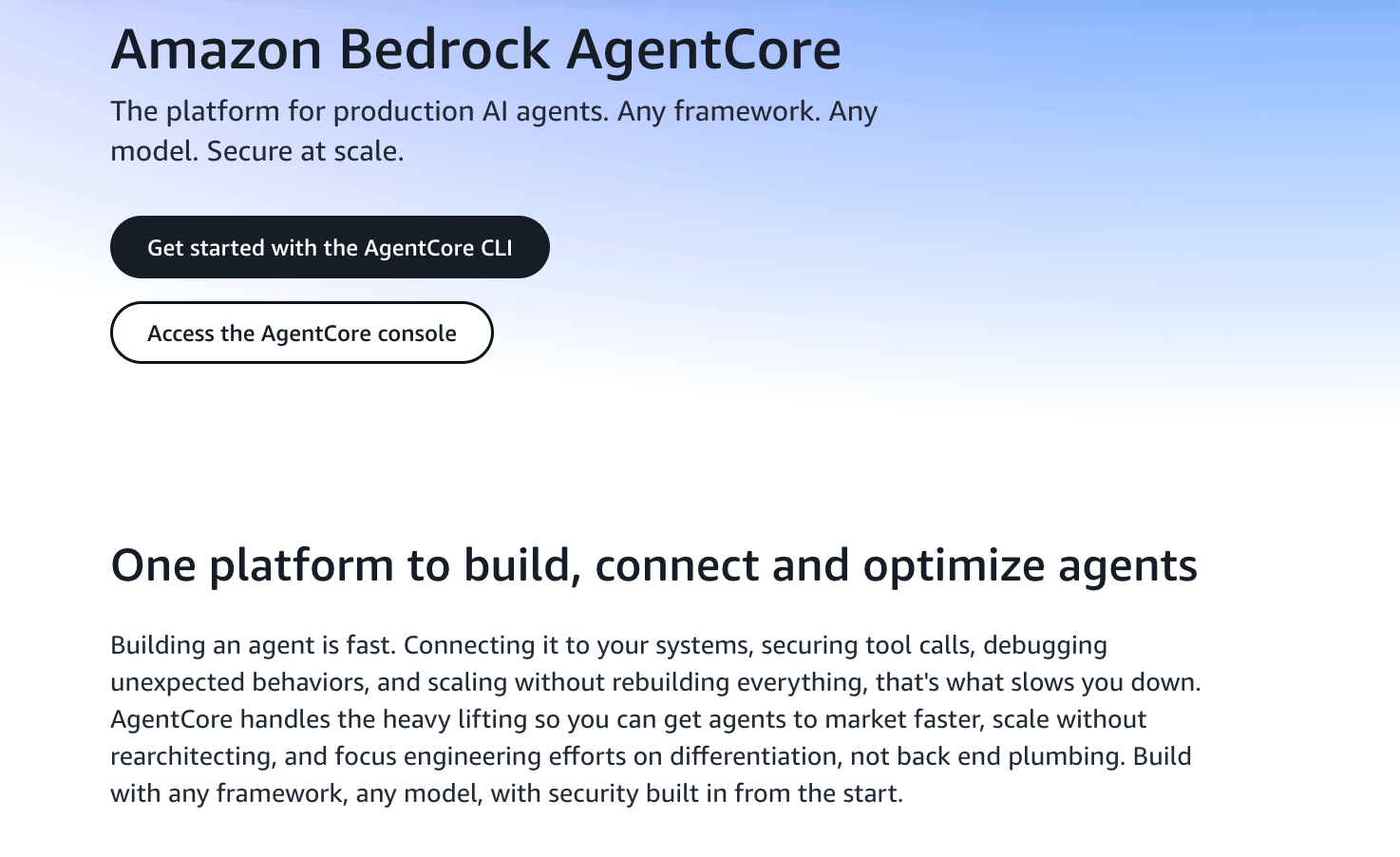
Bedrock’s core value is the model flexibility without the infrastructure overhead. Enterprises can use models from various providers, including Anthropic, Meta and Mistral, switching between them based on the required task.
Bedrock Agents offers multi-step task execution with tool calling, action groups, and agent orchestration. Their Knowledge Bases connect agents to a company’s internal documents and data. Bedrock has specific guardrails that enforce policies, such as filtering content and detecting hallucinations.
Bedrock has all of AWS’ compliance certifications, making it an enterprise-ready AI platform. However, you might only want to truly consider Bedrock if your team is already using AWS, as teams in hybrid or multi-cloud environments wouldn’t be able to enjoy the native integrations.
Choose The Right Platform For Your Company’s Needs
The right enterprise AI platform depends on your team’s skills, your existing tech stack, and how much control you need over data and infrastructure. We have compiled a list of use cases below to help guide your decision.
| “I need a fully compliant enterprise AI platform with custom agents built around my company’s workflows, a RAG system trained on our documentation, role-based access, audit logs, and the option to self-host our LLM.”→ Ajelix Enterprise. Custom agents and connectors are built around your company’s specific processes, with granular RBAC, a full audit trail, reasoning logs, usage monitoring, and quota management. A RAG system trained on your documentation keeps the AI aligned to your standards. Ajelix supports self-hosted LLMs and connects to any third-party API or LLM provider. Pricing is a transparent custom enterprise contract tailored to team size and deployment scope. |
| “My company operates in a regulated industry and data cannot leave our controlled environment under any circumstances.”→ Cohere. Built exclusively for enterprises with the strictest data sovereignty requirements. VPC, on-premises, and multi-cloud deployment options keep your data inside your own infrastructure. Simultaneous SOC 2 Type II, ISO 27001, HIPAA, GDPR, and CCPA certifications make compliance straightforward to document. Not a fit for smaller teams or experimentation – this is a serious commitment. |
| “My team is already running on AWS and I want serverless access to multiple foundation models without managing any GPU infrastructure.”→ Amazon Bedrock. Serverless access to 100+ foundation models from Anthropic, Meta, Mistral, and others, with the ability to switch between them depending on the task. Bedrock Agents handles multi-step agentic workflows, Knowledge Bases connects agents to your internal documents, and Guardrails enforces content filtering and hallucination detection. Only teams already on AWS get the full value. |
| “I have a large data engineering team and we need a single governed platform for data pipelines, ML models, and production AI agents, all on the same architecture.”→ Databricks. The lakehouse architecture unifies data engineering, analytics, and AI in one governed layer. Mosaic AI covers model building, fine-tuning, and serving. Agent Bricks grounds enterprise AI agents in your own governed data. Unity Catalog applies consistent access controls and data lineage across multiple clouds. Requires experienced data engineers to operate. |
| “My team already knows ChatGPT and I want the fastest possible path to broad AI adoption across writing, research, and communication.”→ ChatGPT Enterprise. The fastest onboarding on this list, helped by the fact that most employees are already familiar with ChatGPT. Custom GPTs let departments create custom AI assistants. Native integrations with Microsoft 365, Google Workspace, Slack, GitHub, and Confluence. Per-seat enterprise contract. Best treated as an entry point into AI adoption rather than a long-term autonomous execution platform. |
If Ajelix sounds like the right fit for your company, contact us.
FAQ
It’s a software layer that lets companies build, deploy, run, and govern AI connected to their existing data, systems, and people.
A tool does one specific task well and is easy to replace. A platform hosts multiple services and workflows together with your data and needed integrations.
Cohere is the strongest fit for regulated industries. It’s built exclusively for enterprise with VPC, on-premises, and multi-cloud deployment options, so data never has to leave your controlled environment. But all platforms on this list have enterprise-ready compliance.
It depends on the platform, but ChatGPT Enterprise is a good entry point. As most employees already know the interface, adoption is fast and training is minimal. Databricks requires experienced data engineers to operate effectively. Platforms like Ajelix are built to work with your operations teams, not just your engineering team.
There are three common models: per-seat contracts (a fixed monthly cost per user, predictable for stable teams), consumption-based billing (you pay for what you use, better for lighter workloads), and custom enterprise contracts (tailored to team size and deployment scope, common for full-stack platforms). None of the platforms featured here publicly list their enterprise pricing, and it depends mostly on your team size and usage.
Yes, integration capability is a core requirement for any platform in this category. Ajelix connects to third-party tools via API keys. ChatGPT Enterprise has native connectors for Microsoft 365, Google Workspace, Slack, GitHub, and Confluence. Amazon Bedrock integrates deeply with the AWS service ecosystem. Databricks connects through its lakehouse architecture and Unity Catalog. Cohere deploys inside your own infrastructure.
Not quite. It excels at generative tasks, such writing, research, analysis, summarization, but it’s still closer to an AI assistant than an autonomous agentic platform. Teams looking for agents that act without direct prompting, process structured data end-to-end, or run complex internal workflows without manual input will need a more agentic platform.
A few reliable signals: your team is already using disconnected AI tools and spending time switching between them; you have compliance or data privacy requirements that free-tier or consumer AI products can’t meet; or you’re seeing productivity gains from AI in one department and want to scale that across the company. If any of these apply, it’s worth starting the evaluation now. Implementation takes time, and competitors are likely already in talks.
Agentic AI chat that helps you complete projects
AI for work that ingests, transforms, and delivers the exact deliverables your team needs, while you stay focused on strategy. No more chatting, agents can get the job done.