5 Best AI Agents For Business Now (Reviewed By AI Experts)

Finding the best AI agents for business automation in 2026 is harder than it should be, with new tools and platforms launching nearly every week. To help you choose which AI agent is the right fit for your company’s needs, our team has compiled a criteria-based list.
This list is brought to you by experts who continuously research up-to-date AI trends, tools, and terminology, working for an AI-native platform.
Let’s get into it.
What Are AI Agents For Business
The best-rated AI agents for business are capable of working autonomously to complete the goals of the prompts and instructions they are given. They use tools, access all sources available to them, and finish tasks with minimal human input.
The AI agents on this list are all powerful enough to cover most business use cases, only requiring human involvement in the review process, after the agent has completed its work.
It’s important to note that AI can make mistakes, so human review is always mandatory, especially when critical business tasks are performed.
What Makes An Agent “The Best”: My Evaluation Criteria
To compare these tools fairly, I scored each one against the same five criteria. Each is concrete enough that you can score it against your own priority list:
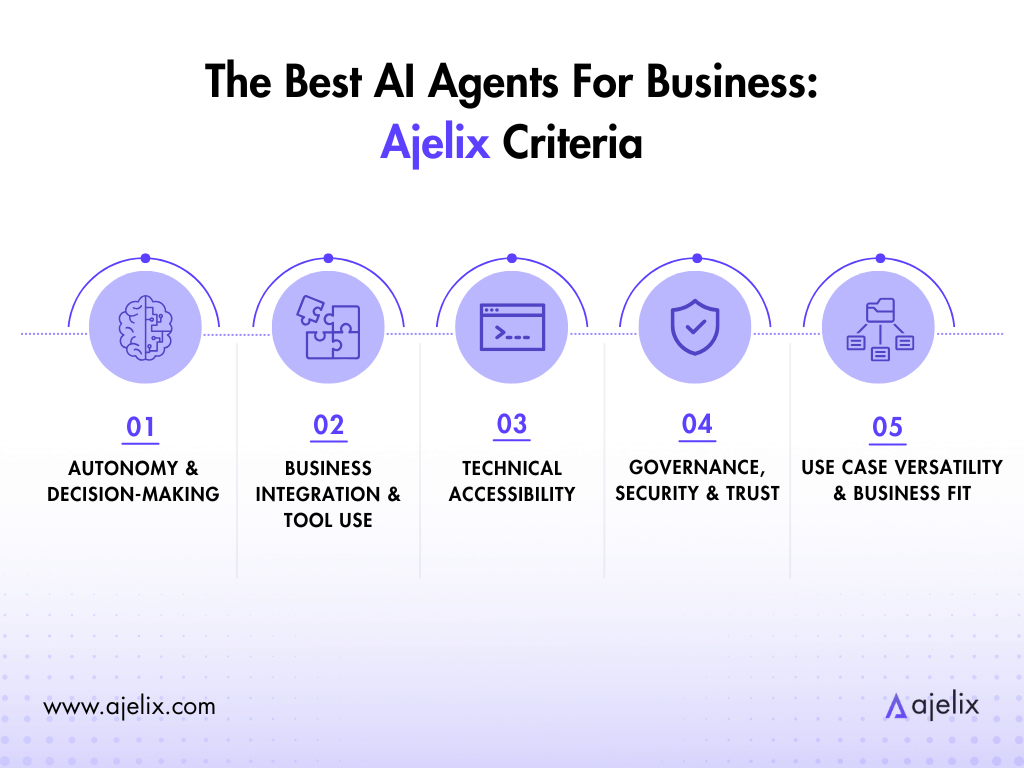
- Autonomy & Decision-Making: Does the agent complete multi-step tasks and workflows without involving a human at every step? Can it reason on its own and recover if something fails?
- Business Integration & Tool Use: Does it have native connections to apps outside its own platform, and/or is it able to connect to external tools through API keys?
- Technical Accessibility: Can the agent only be used by a developer or a technical user? Is it no-code friendly enough to be used by any employee in your company?
- Governance, Security & Trust: Does the agent protect and mask sensitive data, enforce company policies and keep audit logs?
- Use Case Versatility & Business Fit: Can the agent handle workflows regardless of the type of company, including regulated industries? Is it a generalist agent or does it specialize only in a specific field?
My guiding question when considering the tools and platforms to include was: would our company trust this agent in a real-life process completion?
Top 5 AI Agents For Business Right Now
Here are the best AI agents for small business and enterprise teams alike, compared in an overseeable table:
| Agent | Best For | Key Strength | Pricing Model |
| Ajelix | Use-Case Versatility & Business Fit; Governance, Security & Trust; Autonomy & Decision-Making | Generalist platform with custom agents, connectors, RAG on company docs | Free trial; Lite $39/mo; Pro $99/mo; Max $199/mo; Enterprise custom pricing |
| ChatGPT Agent | Technical Accessibility | Easiest entry – lives inside ChatGPT plans many already pay for | Included in ChatGPT Plus/Team/Enterprise plans |
| Microsoft Copilot Studio | Business Integration & Tool-Use; Governance, Security & Trust | A2A protocol lets agents delegate to each other; Work IQ memory keeps context across sessions; both work across Microsoft 365 | Per-user licensing within Microsoft 365 |
| Manus | Autonomy & Decision-Making | The most autonomous agent on this list for long, unattended browser tasks | Subscription tiers + Enterprise plan; check the Manus website for current pricing |
| Relevance AI | Use-Case Versatility & Business Fit; Accessibility & Builder Experience | 100+ agent templates, scheduling, human-in-the-loop approvals | Free tier; paid plans get more expensive depending on agent usage |
Some immediate insights from the table:
- Most agents on the list excel in one or two criteria, while Ajelix excels in various because of their Enterprise plan, which extends the functionality for complex business requirements.
- ChatGPT makes sense as a starting point if you are already used to it and satisfied with current features. Copilot is convenient for teams already using the Microsoft ecosystem.
- Manus refers to itself as the most autonomous agent tool out there, but only for specific intentions – long, unattended tasks. It could be that Manus is less autonomous when it comes to simpler tasks.
Below, I cover what the best AI agents for work do well, what not so much, and who they’re built for.
1. Ajelix
Who is it for? Business teams and enterprises that need a fully compliant AI agent platform with custom agents, workflows and easy API integration to any external tool, platform and LLM.
- Pros: Their Enterprise plan is fully enterprise-compliant with granular RBAC, full audit trail and reasoning logs, usage monitoring and quota management. The custom agents and connectors are built around your company’s processes. Offers ability to self-host LLMs and connect to any third-party API or LLM provider.
- Cons: Run by a smaller team than giants like Microsoft and OpenAI.
While Ajelix offers their agentic AI chat with multiple AI models for individual users, their current focus lies in their Enterprise plan, a transparent custom-priced contract depending on team size and usage. Ajelix works with clients independently to customize workflows and make the company AI-native, regardless of industry.
Ajelix offers the options to self-host your own LLM and connect to any third-party source through an API key. Custom agents and connectors are built around your company’s specific workflows. A RAG system trained on your company’s documentation guides the AI to carry out processes that match your company’s standards and knowledge.
If you’re searching for the best AI agents for business workflow automation, Ajelix might be your fit due to their visual Workflow Builder. Contact the team for a quote.

2. ChatGPT Agent
Who is it for? Individuals and small teams who want a general agent immediately; especially teams already using ChatGPT.
- Pros: Familiar to most teams due to OpenAI being among the leading AI providers. Easy to use for non-technical business users.
- Cons: The agent isn’t as autonomous as others on this list – it tends to check in and ask, rather than completing actions on its own. Not suitable for long sessions.
ChatGPT Agent scores highest on its accessibility for non-technical business users, especially if the users are already familiar with the workspace. It’s a good fit for short tasks, but can ask for too much guidance from the user on longer sessions.
If you’re a small team testing out the implementation of AI agents into your company’s processes, you might want to start with ChatGPT Agent before committing to their or any other platform’s Enterprise plan. ChatGPT is generally seen as a stepping stone, rather than the destination of a company’s AI implementation.
3. Microsoft Copilot Studio
Who is it for? Teams and enterprises already working with Microsoft 365 that want to build and deploy agents without leaving the platform.
- Pros: Over 1,500 pre-built connectors, business users can build agents visually in Copilot Studio with no code required, governance built into the Microsoft stack.
- Cons: Cloud-only deployment. Only working inside Microsoft and requiring an additional Azure subscription. Enterprise pricing is hard to predict.
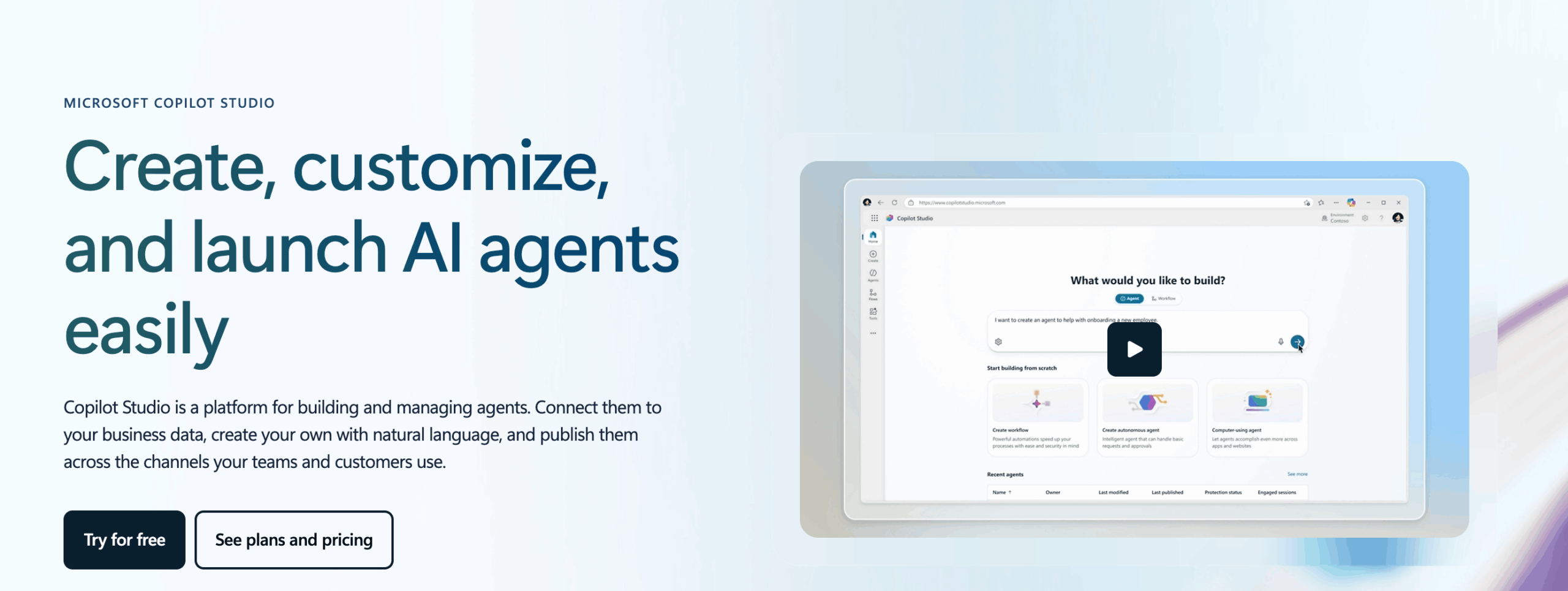
Copilot Studio offers the chance to be used by both developers and business users. Developers get Agent Framework, while non-technical team members can use a drag and drop function to build conversational agents visually, connect them to data sources and publish them.
Copilot is a strong fit for teams already using the Microsoft workspaces, excelling in Business Integration. It is also compliant for teams in regulated industries and data-driven teams due to the standard Microsoft trust layer, audit logging, and enterprise identity controls.
If you’re looking for the best AI agents for business operations, Copilot might be the natural fit for teams who have implemented Microsoft into their daily processes already. Otherwise, it’s an even bigger commitment than the Enterprise plans for AI-native platforms.
4. Manus
Who is it for? Teams that want to delegate complex multi-step tasks to the agent and come back later to a finished project.
- Pros: One of the most autonomous agents available for long sessions. Good fit for research-based work that requires gathering data.
- Cons: Still a maturing platform, and availability may be limited depending on your region.
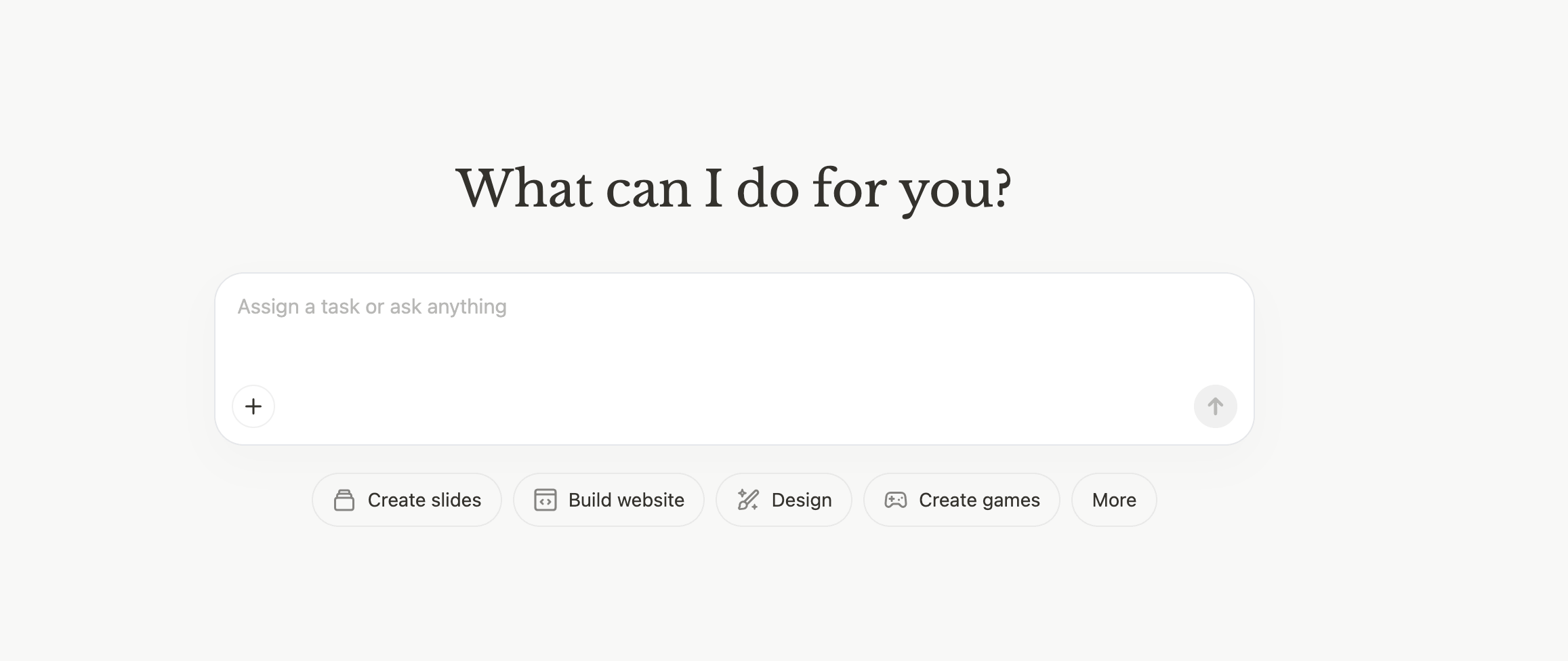
Manus is at the top of the list for its autonomy, with no other tool on this list running unattended for as long. It has gained traction specifically among researchers, software engineers, and product teams needing to automate complex work.
The platform is built with enterprise-ready data protection standards in mind, making it a credible choice for companies handling sensitive research or regulated data.
5. Relevance AI
Who is it for? Leaders in Ops who want to assemble a team of specialized agents running across their company’s sales, marketing and other relevant teams.
- Pros: Treats agents as a unified workforce, with the option to build specialized agents as per your company’s needs. Offers template canvas designed by experts, a Tool Builder and API integrations.
- Cons: Pricing can get unpredictably high when you have multiple agents, connectors and workflows, especially if you’re not monitoring your usage.
Relevance AI is best at Use-Case Versatility because of the option to build whatever agent for whatever industry or process your team needs. It’s a great fit for leaders who care deeply about every team in the company and want to improve everyone’s processes. Simple agents can be shipped without a developer, but maintaining them requires tech expertise.
If you’re looking for a coordinated team of agents, Relevance AI could be your team’s fit.
Choose The Right Agent For Your Business Needs
The right AI agent for your business depends on your team’s size, your existing tech stack, and how much control you need over data and governance. I’ve compiled the use cases below to help guide your decision.
| “I need an enterprise-compliant AI agent platform with custom agents and connectors, a RAG system trained on my company’s docs, role-based access, audit and reasoning logs, and the option to self-host my own LLM, that my whole team can use.”→ Ajelix. Custom agents and connectors are built around your company’s workflows, with granular RBAC, full audit trail and reasoning logs, usage monitoring and quota management, and self-hosted LLMs plus any third-party API. A RAG system trained on your documentation keeps the AI aligned to your standards, regardless of industry. |
| “My small team already uses ChatGPT and we want to test a general agent quickly without a new vendor, a new contract, or any developer setup.”→ ChatGPT Agent. The easiest entry point – the agent is part of the ChatGPT Plus, Team, or Enterprise plans many teams already have, and it’s friendly for non-technical business users. It’s a good fit for short tasks, though it tends to check in and ask rather than finishing long, unattended sessions on its own. Seen as a stepping stone before committing to an enterprise platform. |
| “My organization already runs on Microsoft 365 and Azure, and I want governed agents that live inside the tools my employees already use without leaving the platform.”→ Microsoft Copilot Studio. Over 1,500 prebuilt connectors inside Microsoft 365, with a visual, no-code builder for business users and Agent Framework for developers. Governance comes built into the Microsoft trust layer with enterprise identity controls and audit logging, while the A2A protocol lets agents delegate to each other and Work IQ memory keeps context across sessions. |
| “I want to delegate a complex, multi-step task to an agent and come back later to a finished project, without holding its metaphorical hand along the way.”→ Manus. The most autonomous agent on this list for long, unattended browser tasks. It runs on its own for as long as no other tool here does, making it a good fit for research-based work that requires gathering data from across the web. |
| “I’m an Ops leader and I want to assemble a coordinated team of specialized agents running across my company’s sales, marketing, and other teams.”→ Relevance AI. Treats agents as a unified workforce, with 100+ agent templates, a Tool Builder, API integrations, scheduling, and human-in-the-loop approvals. You can build whatever agent your industry or process needs without a developer, though maintaining them requires tech expertise and pricing can climb with multiple agents, connectors, and workflows. |
If Ajelix sounds like the right fit for your company, contact us.
FAQ
An AI agent is a tool that works autonomously to complete the goals you give it, using tools, accessing data, and finishing tasks with minimal human input. Human review is still required, especially when important data is involved.
It depends on your needs. Ajelix ranks highest across autonomy, governance, and versatility for enterprises. ChatGPT Agent is the easiest starting point for small teams. Microsoft Copilot Studio is the natural fit for organizations already on Microsoft 365, while Manus leads on unattended autonomy and Relevance AI – on customizable multi-agent setups.
Enterprise-ready agents like Ajelix and Copilot Studio offer role-based access, audit and reasoning logs, usage monitoring, and policy enforcement.
Pricing ranges widely. Ajelix runs from a free trial up to $199/mo, plus custom enterprise contracts. ChatGPT Agent is included in existing ChatGPT paid plans. Copilot Studio is per-user within Microsoft 365. Manus uses subscription tiers, and Relevance AI has a free tier with usage-based paid plans.
Yes, to varying degrees. Manus runs unattended for long sessions with the least human input. Others, like ChatGPT Agent, tend to check in and ask for guidance rather than finishing on their own. Regardless of autonomy, human review of finished work is always recommended.
ChatGPT Agent is the easiest entry point – it’s part of paid plans many small teams already have and requires no developer setup. It’s a good stepping stone before committing to an enterprise platform. Relevance AI is another option if you want to build specialized agents without a developer.
Not always. ChatGPT Agent and Copilot Studio’s visual builder are no-code friendly for business users. Relevance AI lets you ship simple agents without a developer, though maintaining them takes technical expertise. Ajelix custom agents and connectors are built around your workflows, handled by the team.
A chatbot answers questions conversationally. An AI agent acts: it plans, uses tools, accesses data sources, and completes multi-step tasks to deliver finished work, with minimal human involvement at each step.
Agentic AI chat that helps you complete projects
AI for work that ingests, transforms, and delivers the exact deliverables your team needs, while you stay focused on strategy. No more chatting, agents can get the job done.