AI for Market Research: Top Tools & Prompts In 2026

You asked your research agency a question weeks ago and you’re still waiting for an answer. Meanwhile, your competitor asked the same question to AI and has already launched a new feature. This is the reality of what using AI for market research can accomplish.
Our team of AI experts compiled the best AI tools for market research, with what each one does well, what not so much, and who it’s built for. We also included a walkthrough using a prompt that delivers clear results, plus a look at what research communities recommend.
Let’s dive in.
Table of Contents:
What Using AI For Market Research Looks Like
In a 2026 report, statistics show that 73% of analytics professionals are using agentic AI for data preparation and integration. In last year’s report, 81% of researchers who use AI stated they can now spend more time on strategic work.
In practice, this is how teams are splitting the research work:
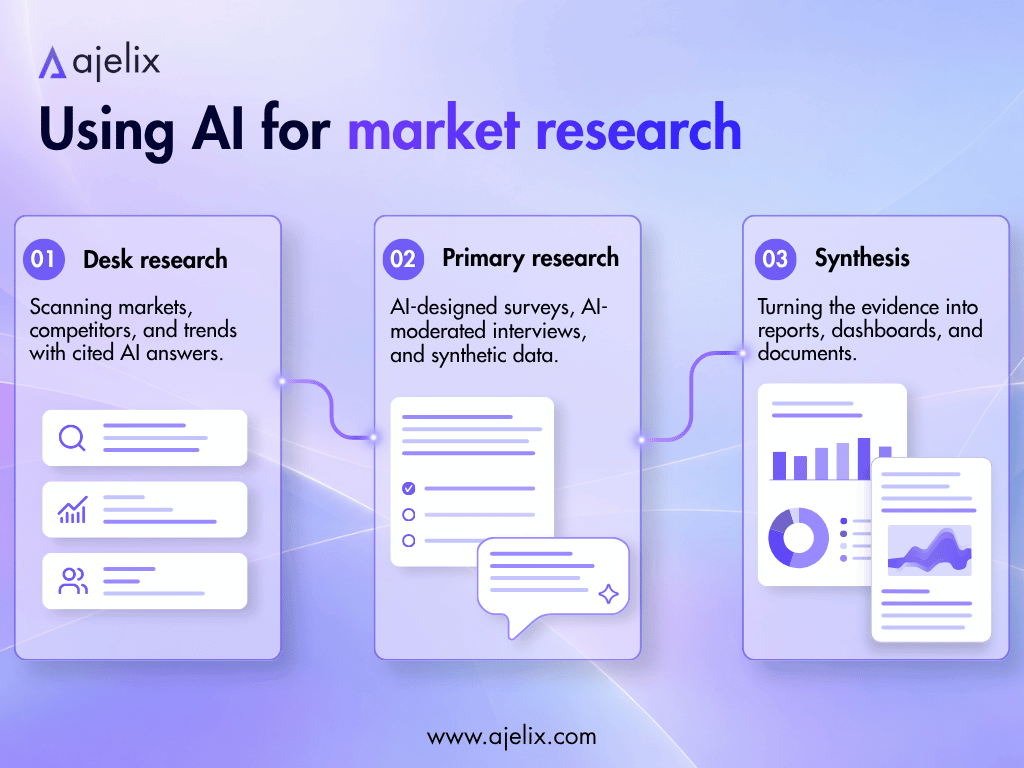
- Desk research: scanning markets, competitors, and trends with cited AI answers;
- Primary research: AI-designed surveys, AI-moderated interviews, and synthetic data;
- Synthesis: turning the evidence into reports, dashboards, and documents.
As we go through the best AI platforms for market research, keep in mind that some AI can come with data safety risks. When implementing AI in your business, governance must be an integral part of the platform you will be using.
The 5 Best AI Tools For Market Research Now
We have compared the following tools that use agentic and generative AI for market research:
| Tool | Best For | Key Differentiator |
|---|---|---|
| Ajelix | End-to-end agentic research with deliverables that are ready to share | Agents research, analyze, and publish interactive webpages, spreadsheets, and reports |
| Perplexity | Cited desk research and trend scanning | Real-time web answers with sources attached to every claim |
| Quantilope | Automated quantitative studies | quinn AI copilot, plus 16 automated methods, with insights in under a second |
| GWI Agent Spark | Instant consumer insights from validated survey data | Acts as an insights analyst, answering questions from 1.4M+ annual surveys |
| Crayon | Competitive intelligence | Tracks competitor messaging, pricing, and product changes automatically |
Ajelix, Perplexity and GWI have consumer plans and dedicated enterprise platforms with custom pricing, while Quantilope and Crayon only offer pricing tailored to your needs, without the option to choose from multiple plans.
Below, we cover what each tool excels at, what it lacks, and who is meant to use it.
1. Ajelix
Who is it for? Business teams, marketers, founders, and analysts who want to use AI for market research and get a finished, shareable deliverable at the end.
- Pros: Agents execute complete workflows; ability to turn deep web research, competitive analysis, and synthesis into executive summaries; accepts CSVs, spreadsheets, PDFs, or 20+ data sources up to 1GB; builds interactive webpages, dashboards, Excel and Google Sheets models, and PowerPoint decks; no coding required; offers Agent Skills and a Google Workspace integration; uses AI infrastructure they own.
- Cons: Less suited for code-first users.
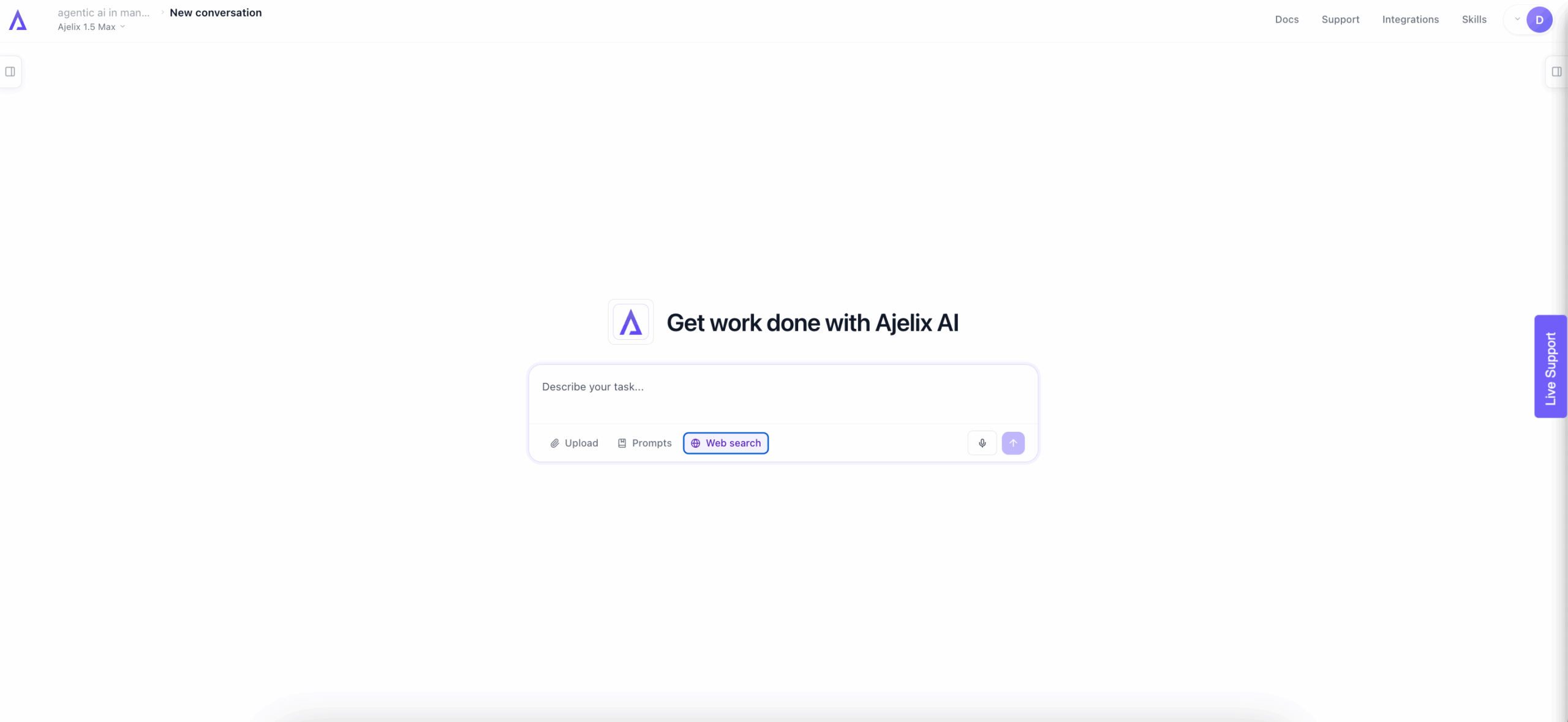
Ajelix’s AI completes the project, not just advises you like chatbots would. Ajelix agents run whole workflows: you describe what you need, and the agent researches the market, analyzes competitors, and produces the deliverable.
Ajelix turns research into interactive webpages with charts and icons, spreadsheet models, or presentation-ready reports, so the output can go straight into a pitch, a board meeting, or a strategy doc.
Ajelix covers desk research, competitor scans, survey analysis, and stakeholder-ready reporting, all in one workspace. It also works well as the best AI tool for summarizing market research, since agents take in survey exports, transcripts, and spreadsheets, and turn them into structured, cited summaries.
Ajelix is also available as an enterprise platform, with all the needed governance and security.

2. Perplexity
Who is it for? Anyone who needs fast, cited answers about markets, competitors, and trends.
- Pros: AI-powered answer engine delivering accurate, trusted, real-time answers; every response cites its sources; premium data sources and connectors can fold internal and paid content into answers; available on web and mobile, with an API and the Comet browser for teams building on top of it.
- Cons: Everything is synthesized from published sources, including the reports and dashboards its agentic modes build.
Perplexity is an answer engine. If you ask about a market’s size, key players, or regulatory changes, you get a synthesized briefing, with sources and conversational follow-ups for digging deeper into one market.
Its project mode and the Computer agent turn research into reports, spreadsheets, dashboards, and slide decks, always built from public sources rather than first-party data.
Use it for evidence gathering, as it tells you what’s known, not what your customers think. The research is only as good as the question.
3. Quantilope
Who is it for? Insights teams that run structured quantitative research and want it in-house instead of via an agency.
- Pros: 16 automated advanced methods, such as MaxDiff, TURF, PSM, segmentation, and more; insights become available in less than a second after a survey response; access to 300M+ consumers through its trusted panel network; the quinn AI copilot supports study design and analysis.
- Cons: Built for structured consumer research programs rather than quick questions; a DIY platform, so teams must invest in onboarding and training.
Quantilope combines generative AI with proper methodology, taking a platform approach to traditional market research. It features AI-powered consumer research and growth principles backed by science.
The 16 automated methods set it apart, making Quantilope one of the best AI for market research.
4. GWI Agent Spark
Who is it for? Marketers who need consumer insights at an audience level.
- Pros: Ask questions and get analyst-quality answers based on 1.4M+ annual surveys, 35B data points, and 15+ years of validated research across 53 markets; works inside AI tools like ChatGPT, Claude, Copilot, as well as the GWI platform.
- Cons: You’re querying GWI’s validated dataset only, not the open web.
GWI Spark solves the biggest weakness of generic AI research: made-up or outdated statistics. Every insight comes from verified survey data representing real consumers. You use their AI “Agent Spark” as though you’re talking to an analyst.
GWI’s own research shows professionals trust AI most when sources are cited and accuracy is consistent.
5. Crayon
Who is it for? Product and marketing teams who need to know what competitors are doing right now.
- Pros: Crayon uses your data and creates instant content: automatic competitor monitoring with AI news summarization and AI importance scoring; integrations with Salesforce, Slack, Highspot; win/loss analysis, engagement tracking, and influenced-revenue reporting show what the CI program moves.
- Cons: It’s a competitive intelligence platform, meaning it doesn’t run your surveys or consumer studies.
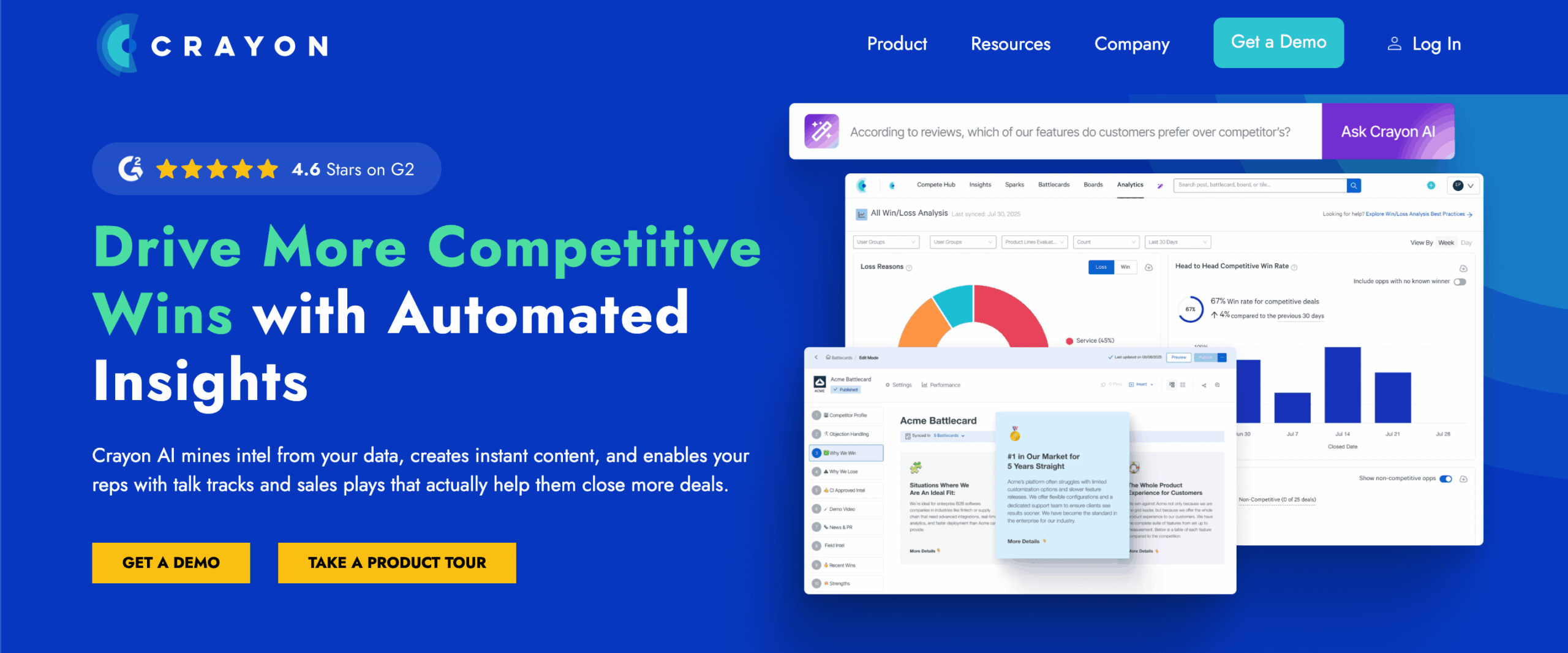
Crayon monitors your competitors and alerts you to relevant intel, allowing you to focus on high-impact work. Paired with a desk-research tool and a survey platform, it covers the competitor side of market research with almost no manual effort.
How To Use AI For Market Research (Ajelix Walkthrough)
Good AI prompts for market research name the market, framework, and deliverable.
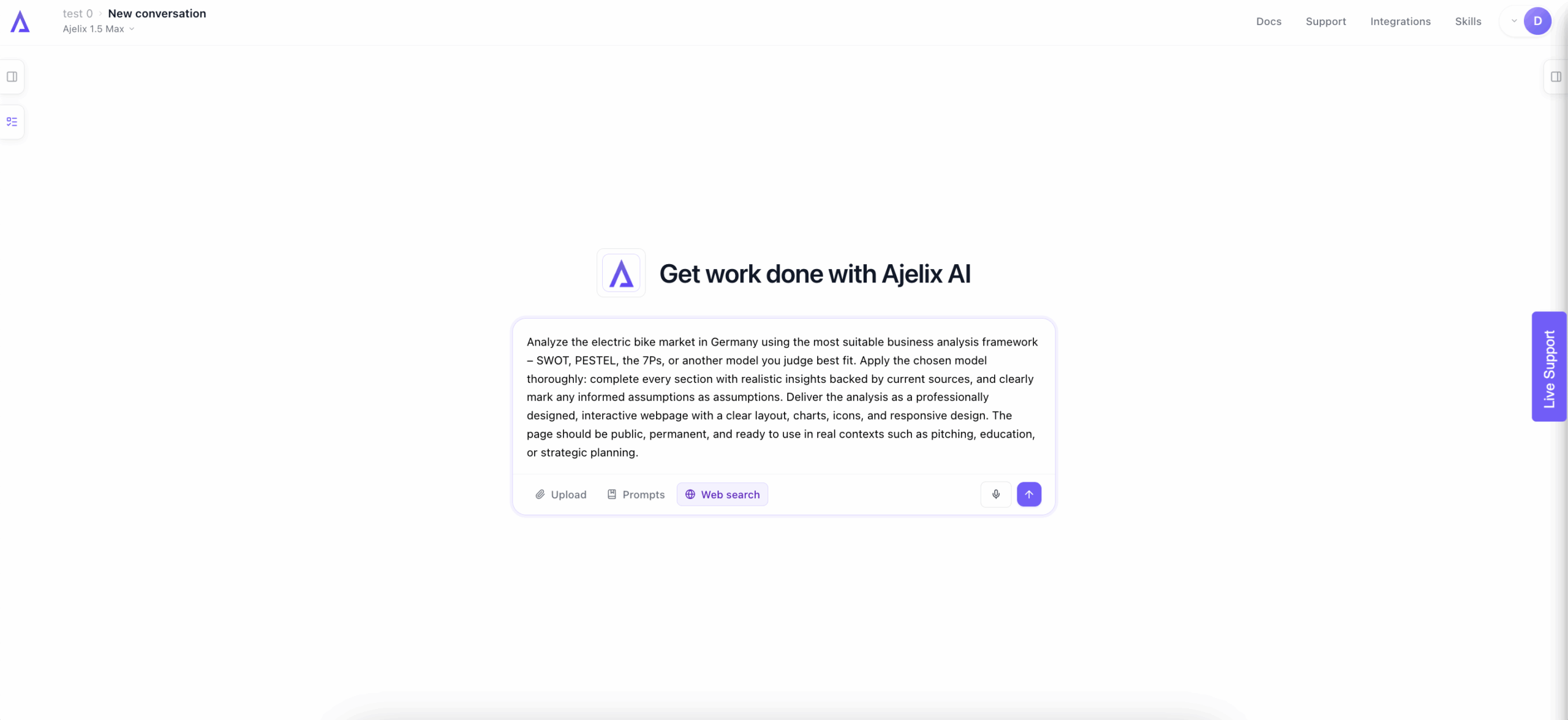
This is the AI prompt for market research that we will insert into Ajelix – it can research, analyze, and publish the result:
Analyze the electric bike market in Germany using the most suitable business analysis framework – SWOT, PESTEL, the 7Ps, or another model you judge best fit. Apply the chosen model thoroughly: complete every section with realistic insights backed by current sources, and clearly mark any informed assumptions as assumptions. Deliver the analysis as a professionally designed, interactive webpage with a clear layout, charts, icons, and responsive design. The page should be public, permanent, and ready to use in real contexts such as pitching, education, or strategic planning.
Why this prompt works also explains how to use AI for market research:
- It lets the agent pick the framework. Naming the options and letting the agent judge fit gets the right lens.
- It demands sourcing and labels assumptions. This ensures invented numbers can’t pose as facts.
- It specifies the deliverable. “Interactive webpage, responsive, public and permanent” turns a chat output into something you can add to a board deck or share with a client.
Here is the Ajelix walkthrough:
Step 1
Open Ajelix and paste the prompt, replacing the market and country with yours.
Step 2
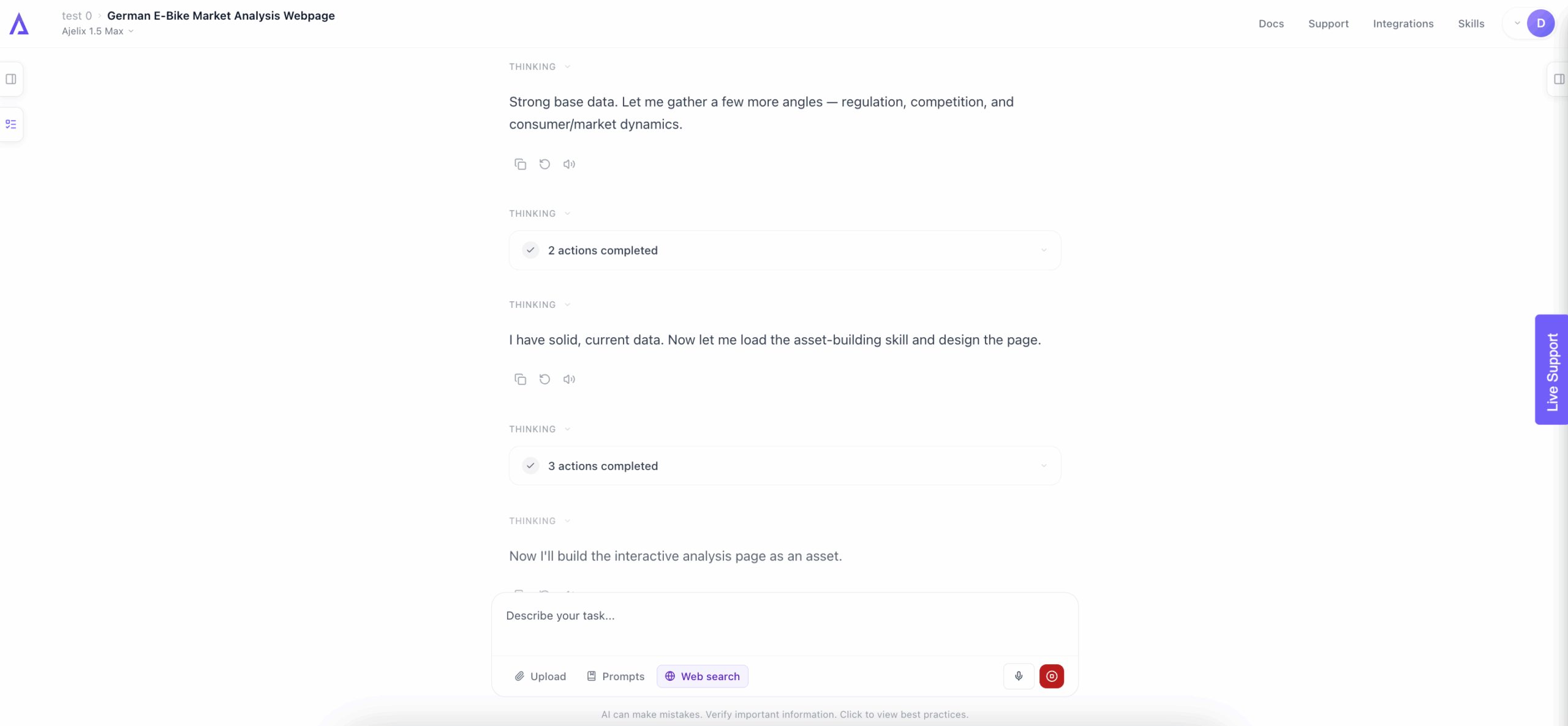
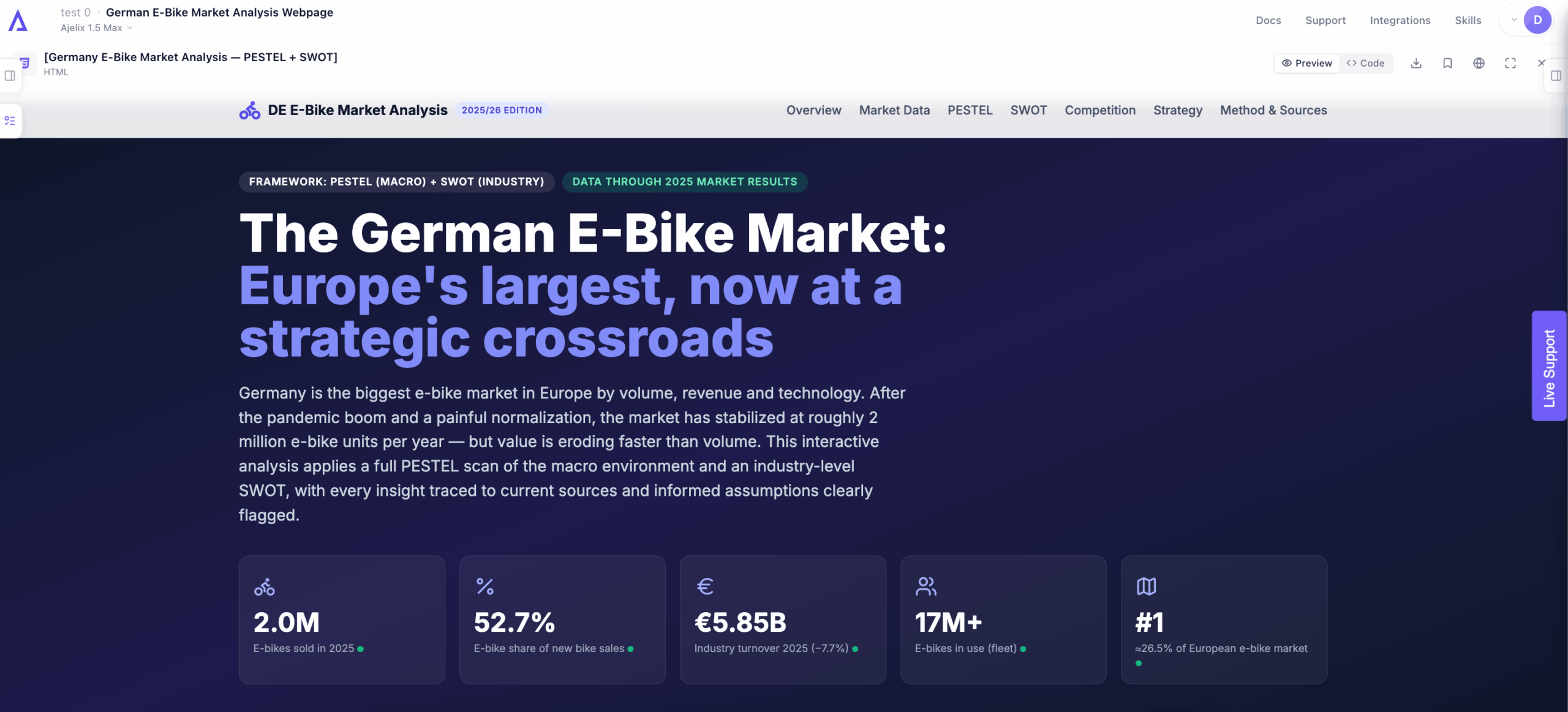
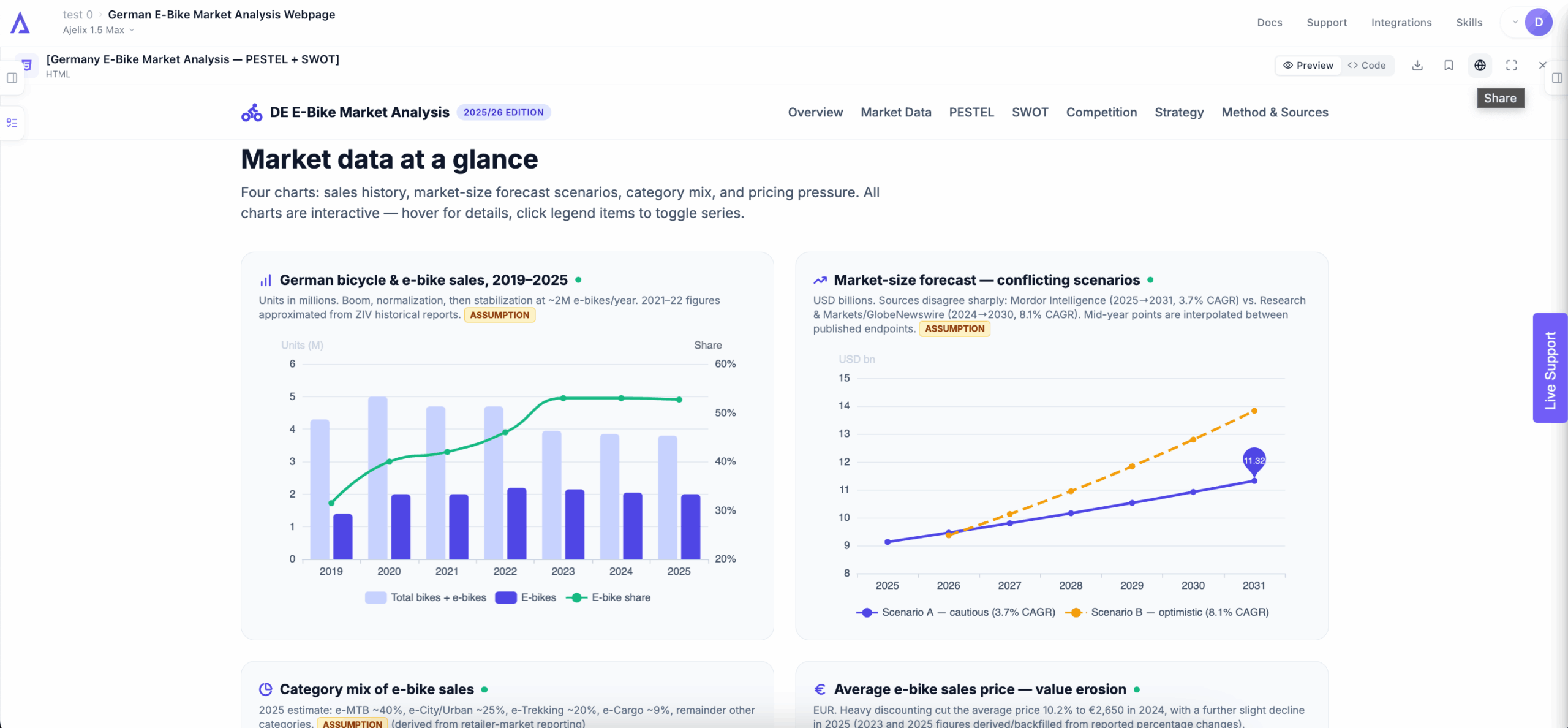
Let the agent run. It searches sources, assembles the analysis, and builds the webpage with charts and icons.
Step 3
Review the cited sources and the flagged assumptions. Adjust what doesn’t match your knowledge – your judgment is important.
Step 4
Publish and share the link. The page stays live.
The same pattern transfers to competitor teardowns, TAM estimates, and survey synthesis. To use AI for market research well, treat prompts like briefs you’d give a real-life junior analyst: specific, sourced, and resulting in a deliverable.
Other Prompts You Can Use
The walkthrough prompt covers full market analysis, but the following three are simpler tasks.
Use this when a competitor move blindsided you and you need an immediate solution:
Compare [our product] with its top 3 competitors. For each one, list the positioning, pricing model, core promise, and most credible weakness. End with a one-page comparison spreadsheet our sales team can use, with a final column of talking points per competitor.
This is the fastest way to make survey results readable for people who will never open the raw export:
Here is a CSV of 500 open-ended survey responses [attach file]. Group them into themes, quote 3 representative answers per theme, rank themes by frequency, and highlight the single insight we should act on first. Deliver it as a summary webpage with a theme-frequency chart.
If you give a bare estimate, someone in the room will question it. If you show the math, the numbers prove it:
Estimate the market size for [product] in [country] using a bottom-up calculation. Show the full math, cite every source, and mark each assumption clearly. Deliver a one-page report I can hand to our CFO without editing.
Each one names the evidence rules and the deliverable.
What The Community Recommends
Reddit’s research and marketing communities regularly mention a few other tools outside our top five:
- Outset: AI-moderated qualitative interviews at scale, with text, voice, and video in 40+ languages, with auto-tagged themes. Frequently cited in insights communities for running hundreds of interviews in days.
- Listen Labs: AI-moderated customer interviews with synthesis in under 24 hours, popular with product teams doing continuous discovery.
- SurveyMonkey: Its AI-assisted survey creation and analysis features keep it a common choice for quick, lightweight studies.
- Qualtrics: Its AI features target unstructured feedback like video and call transcripts, and it has pushed synthetic respondent research.
- Similarweb: Often recommended alongside AI tools for hard traffic and digital demand data that LLMs can’t produce.
Choose The AI Tool For You
The answer to “which AI is best for market research” depends on the job and your specific needs. To help you figure it out, we have separated the tools in our article by use cases.
| You need… | Best tool |
|---|---|
| A complete market analysis with shareable, interactive deliverables | Ajelix |
| Fast, cited facts about a market, competitor, or trend | Perplexity |
| Statistically rigorous surveys – pricing, segmentation, concept testing | Quantilope |
| Audience-level consumer insights from validated survey data | GWI Agent Spark |
| Automatic alerts on competitor moves and product changes | Crayon |
| Other tools recommended by the community: | |
| Hundreds of AI-moderated interviews at scale | Outset / Listen Labs |
| Lightweight surveys with AI-assisted analysis | SurveyMonkey |
| Enterprise-scale analysis of unstructured feedback – video, call transcripts, open-ended responses | Qualtrics |
| Real traffic and digital demand data that AI can’t generate on its own | Similarweb |
Unsure where to start? Ajelix offers the most secure AI technology, run on their own models.
FAQ
Ajelix for end-to-end agentic research with published deliverables, Perplexity for cited desk research, Quantilope for rigorous quantitative studies, GWI Agent Spark for validated consumer data, and Crayon for competitive monitoring. Most teams combine two or three.
Perplexity for cited desk research and Ajelix for agentic research with published deliverables are the natural starting points for smaller teams.
Ajelix: its agents ingest survey exports, transcripts, and spreadsheets, then produce structured, cited summaries as webpages or documents. Perplexity works for summarizing public web sources, and GWI Spark handles validated consumer data.
No, and the data backs this up. GRIT found 81% of researchers using AI report doing more strategic work, not less. AI compresses execution: survey drafting, data prep, report writing. Judgment, such as what to ask, what the numbers mean, what to recommend, stays human.
Only as reliable as the data underneath. Generic chatbot answers can blend outdated or invented statistics. Tools grounded in validated data (GWI, Quantilope) and prompts that require cited sources with labeled assumptions produce research you can defend.
The best AI prompts for market research specify four things: the market, the framework (SWOT, PESTEL, 7Ps), the sourcing rules (cite everything, label assumptions), and the deliverable (webpage, report, spreadsheet).
Agentic AI chat that helps you complete projects
AI for work that ingests, transforms, and delivers the exact deliverables your team needs, while you stay focused on strategy. No more chatting, agents can get the job done.