Agentic AI In Manufacturing: Use Cases With Prompts

Unplanned downtime costs a typical factory around $125,000 for every hour the line doesn’t move. In most plants, the sensor data that could have prevented the failure was already in a dashboard, waiting for someone to open it, interpret it, and file a work order.
Agentic AI in manufacturing gets rid of the waiting period. Agents reason through your data, plan the response, and start executing it.
This guide breaks down five agentic AI use cases in manufacturing, plus two back-office workflows your teams can use right away, each with an Ajelix output example and the exact prompt to copy.
Let’s dive in.
What Agentic AI Means For Manufacturing
Every plant already has sensors, MES exports, ERP reports, and quality logs. Most can explain exactly what went wrong and when, and then wait for someone to act on it.
Agentic AI applications in manufacturing observe the signal, plan a multi-step response across systems, execute what they’re allowed to, and escalate to a human in high-value cases.
In order to trust the technology, agents operating near production need permissions, audit trails, and human approval gates, meaning you should invest in an enterprise deployment.
Ajelix Enterprise uses the same agentic chat interface your teams are already accustomed to, but also includes granular RBAC, hash-chained audit logs, usage quotas, and custom guardrails, so that the plant leadership is in full control of what agents can and cannot do.
Why Manufacturers Are Adopting AI
Recent data shows clear signs of agentic AI improving manufacturing processes:
- In early 2025, only 6% of surveyed manufacturers were using agentic AI, and 24% are expected to be using it by 2027.
- Average enterprise AI agent ROI in 2026 is 171%.
- In 2023, before the AI boom, unplanned downtime cost a typical industrial business around $125,000 per hour. With the introduction of agentic AI, predictive maintenance agents typically pay for themselves in 3-6 months.
Companies that see gain from AI start with workflows that are high-volume and data-heavy, still keeping humans in the loop. The workflows we showcase below are meant exactly for that.
5 Agentic AI Use Cases In Manufacturing (With Ajelix examples)
Here are the five agentic AI use cases in manufacturing with the strongest documented value. Each one can be executed through the Ajelix interface, also available in the enterprise plan.
Predictive Maintenance And Downtime Response
In this use case, agents turn a prediction into a completed workflow, using sensor data on vibration, temperature, and runtime. It ranks failure risk, drafts the maintenance plan, and prepares work orders. The maintenance manager approves the schedule.
The walkthrough in Ajelix:
Upload your machine sensor export to the Ajelix chat, then prompt:
You're a maintenance planning agent for our CNC machining line. I've uploaded machine_sensor_data.csv with vibration, temperature, and runtime data for 12 machines over the last 90 days, plus maintenance_history.xlsx with past breakdowns and part replacements. Identify machines showing abnormal degradation patterns, rank them by failure risk over the next 4 weeks, and build a maintenance schedule that keeps jobs on their committed due dates. Flag any machines where failure risk is high enough to warrant stopping production now. Output: an Excel work-order plan and a one-page summary for the maintenance manager.
Ajelix’s output:
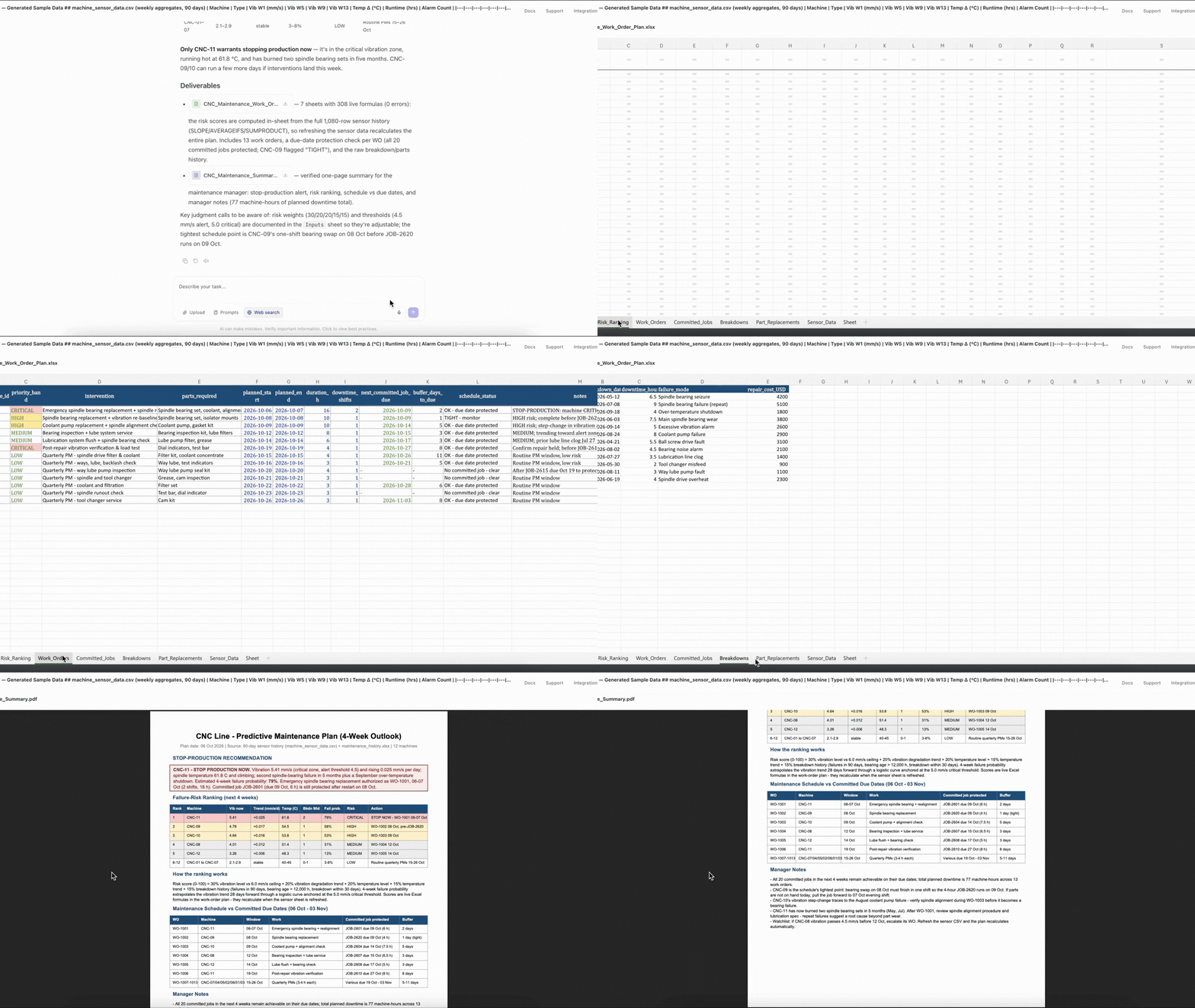
The agent reads 90 days of sensor data against your breakdown history, ranks the fleet by failure risk, and hands you a finished Excel work order plan and a summary of what actions to take.
Quality Inspection And Defect Root Cause
AI can find the pattern behind defects faster than manual review.
The walkthrough in Ajelix:
Upload your defect logs and shift parameter data to the Ajelix chat, then prompt:
Act as a quality root cause agent. I've uploaded defect_log.csv with two months of inspection data (defect type, station, shift, machine, operator, material lot) and shift_parameters.xlsx with process settings per station. Build a Pareto analysis of defect types, identify whether the spike clusters by machine, shift, or material lot, and draft the top three probable root causes with supporting evidence from the data. Then draft a corrective action summary in our 8D report format for the quality manager to review.
Ajelix’s output:
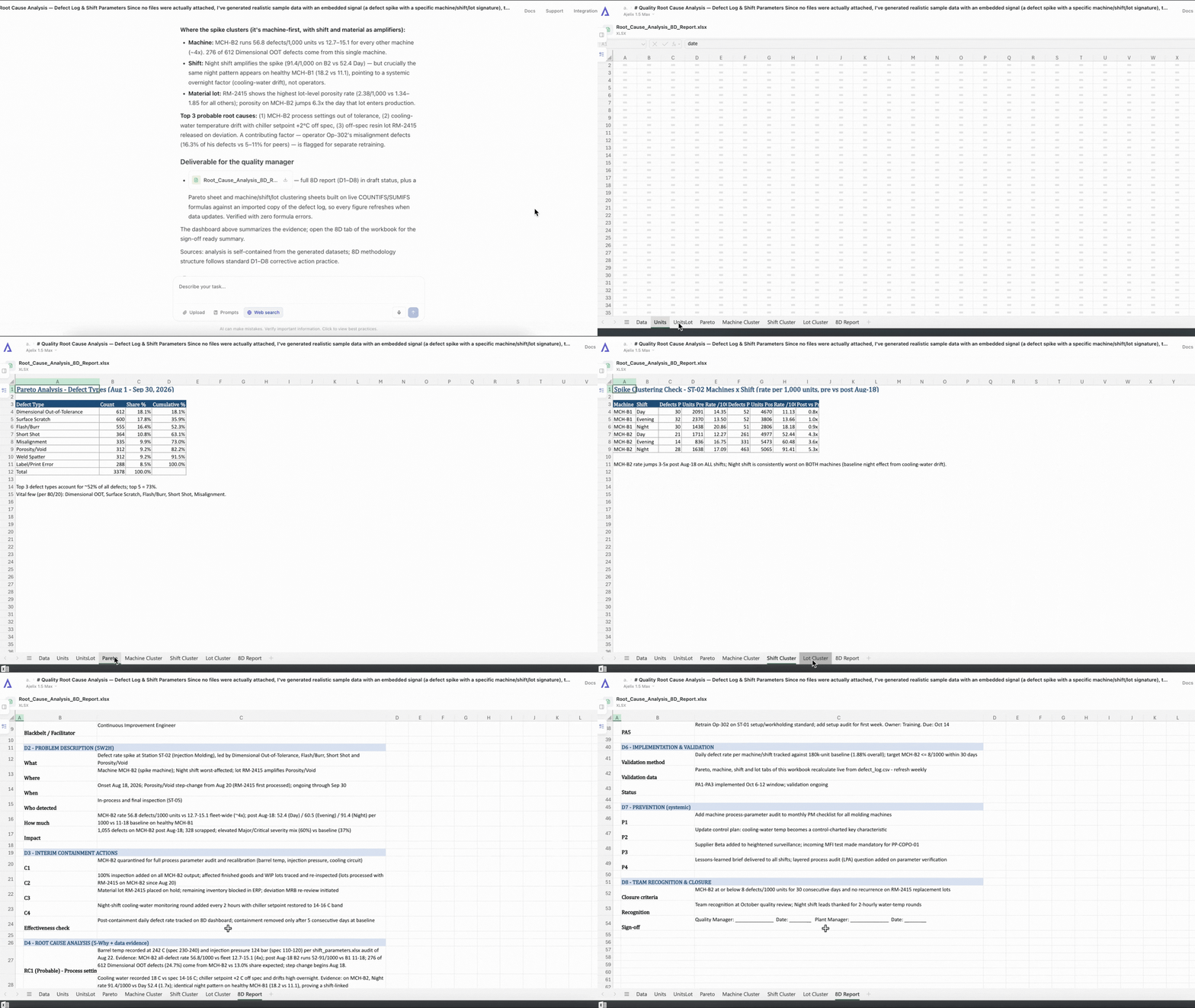
The agent delivers the Pareto ranking, the machine, shift and lot clustering, the top three probable root causes, and a draft 8D report ready for the quality manager, all recalculated live from the inspection log.
Production Scheduling And Shift Performance
Dynamic production scheduling needs the agent drafting and the planner approving the drafts. A common pain for production teams is when one shift outperforms another and nobody can say why.
The walkthrough in Ajelix:
Upload your production order, machine capacity, and OEE history data to the Ajelix chat, then prompt:
I've uploaded production_orders.csv (current order book with quantities and due dates), machine_capacity.xlsx (available hours per machine per shift), and oee_history.csv (last 8 weeks of OEE by shift and line). Our largest customer moved their delivery date up by five days. Rebuild the production schedule to protect the new due date, show which orders get delayed and by how much, and explain whether the gap can be closed through shift patterns or machine reallocation. Output the revised schedule as Excel and a short briefing I can take to the morning production meeting.
Ajelix’s output:
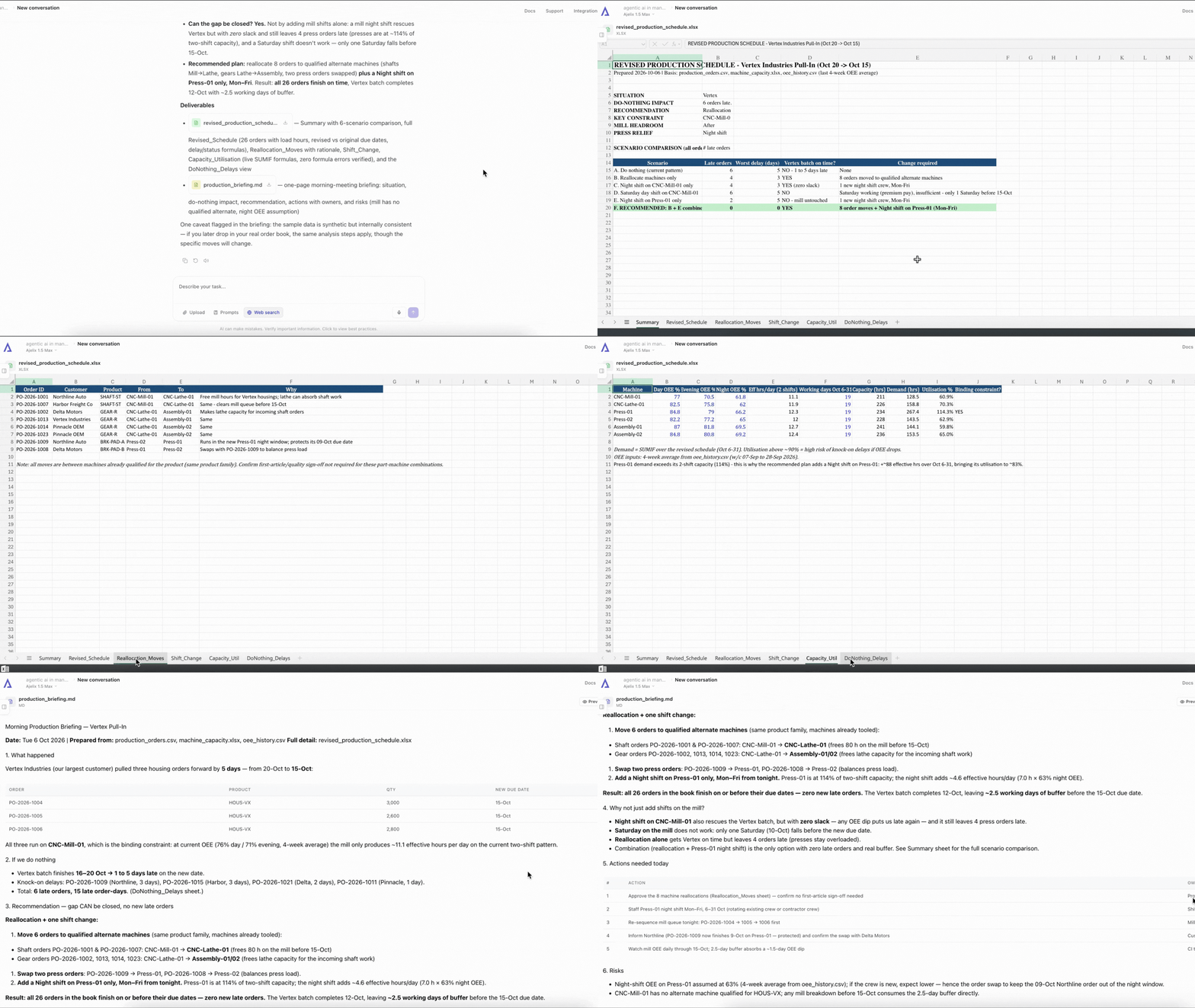
The agent rebuilds the schedule around the due date, shows which orders can’t make it and by how much, tests whether shift patterns and machine reallocation make up the lost days, and hands over the revised plan in Excel, plus a short briefing. The planner gets the final say.
Procurement, Supplier Databases, And Warehouse Control
Supplier databases, item catalogs, and warehouse stock files are usually spread across multiple spreadsheets nobody has time to merge, so nobody can quickly answer what’s stored where, how much of it there is, and who’s responsible for it.
The walkthrough in Ajelix:
Upload your supplier database, item catalog, and inventory level data to the Ajelix chat, then prompt:
Act as a procurement and warehouse data agent. I've uploaded supplier_database.xlsx (suppliers, parts, prices, lead times), item_catalog.csv, and inventory_levels.csv (stock per warehouse location). Clean and merge them into one master database: standardize supplier and part names, flag duplicates, and link each part to its supplier, current stock, and storage location. Then identify parts that will short against production_forecast.csv given lead times, flag single-source items where a stockout stops a line, and for each warehouse location list what's stored there and who is responsible. Output the master database as Excel plus a prioritized reorder plan with suggested quantities and dates.
Ajelix’s output:
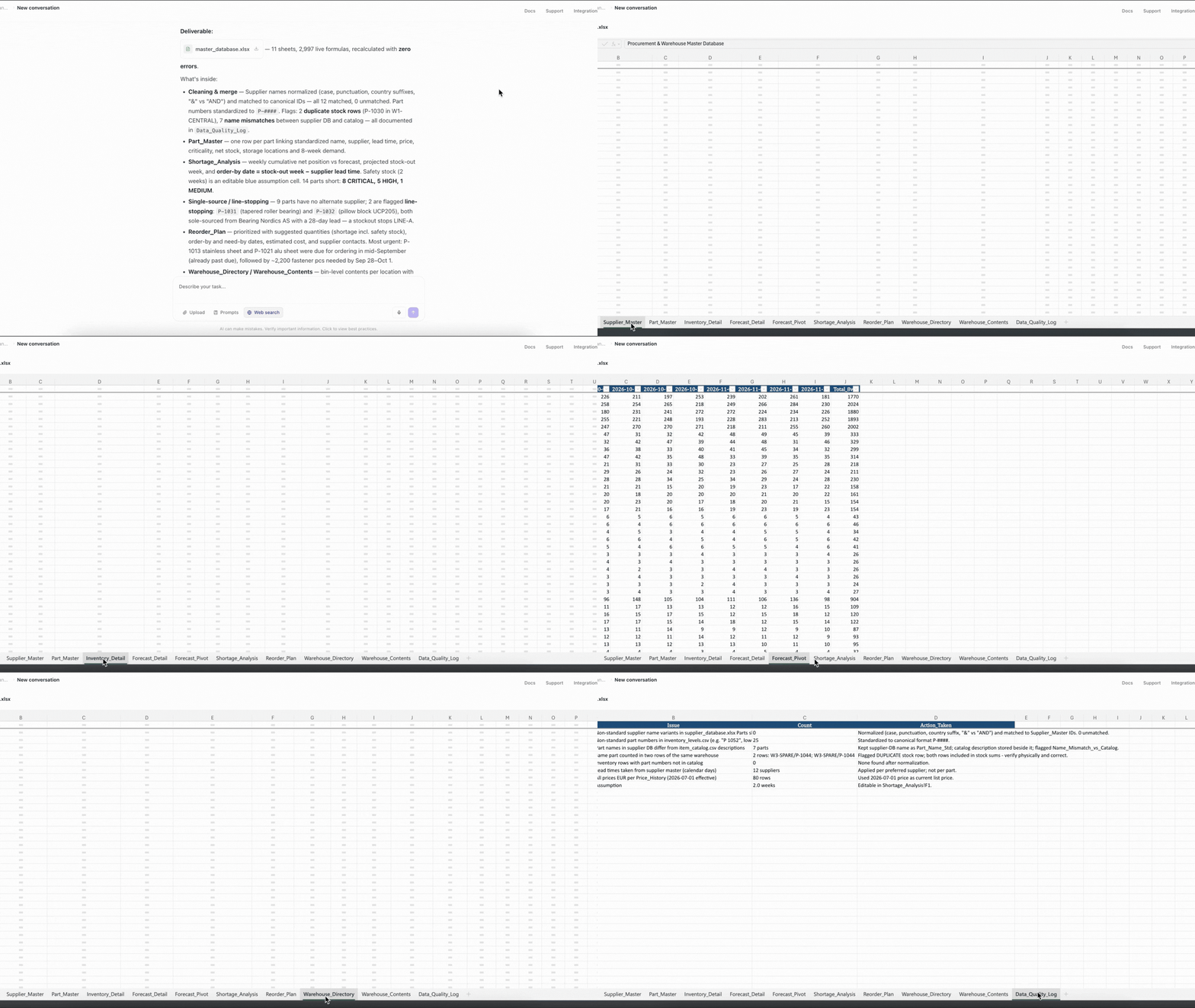
You now have a complete procurement picture in one workbook, with:
- The master database linking every part to its supplier,
- Stock and storage location,
- The shortage list against the forecast,
- Warehouse breakdown with who owns what,
- A prioritized reorder plan that tells you what to order, how much, and by when.
The buyer just confirms the orders.
Pharmaceutical Manufacturing Workflows
Agentic AI in pharmaceutical manufacturing deserves its own section because the rules are stricter. For this field, AI can help with workflows like batch record review, deviation investigation, and SOP compliance.
The walkthrough in Ajelix:
Upload your batch records, deviation log, and SOP checklist to the Ajelix chat, then prompt:
You're a quality documentation assistant. I've uploaded batch_record_export.csv for lot 47291, deviation_log.xlsx for the past quarter, and our SOP checklist. Prepare a review-by-exception package: verify completeness of the batch record against the checklist, flag every field that's missing or out of specification, summarize open deviations with their status, and list every item requiring Quality Unit review and sign-off. Clearly label all output as DRAFT – final review and disposition by the Quality Unit.
Ajelix’s output:
The agent compares the record to the checklist, flags problems, and forwards open deviations to the reviewer. The Quality Unit alone completes the review and signs the disposition, with every output clearly labeled DRAFT.

2 More Use Cases For Speeding Things Up
Agentic AI in the manufacturing industry also includes the back office tasks where agents speed up repetitive processes.
Workforce And Shift Scheduling
Manufacturing works in shifts, and the schedule is often part of huge Excel files that someone rebuilds by hand every month. Agents can both build and maintain them.
The walkthrough in Ajelix:
Upload your shift schedule and employee data to the Ajelix chat, then prompt:
I've uploaded shift_schedule.xlsx (this month's plan for 3 shifts, 45 operators) and employee_master.xlsx (roles, skills, contract hours, vacation days). Build next month's shift schedule: cover every station on every shift with a qualified operator, respect contract hours and approved vacation, keep weekend rotations fair, and flag stations where we don't have qualified coverage. Output the schedule as Excel with one tab per shift, plus a coverage-gap summary.
Ajelix’s output:
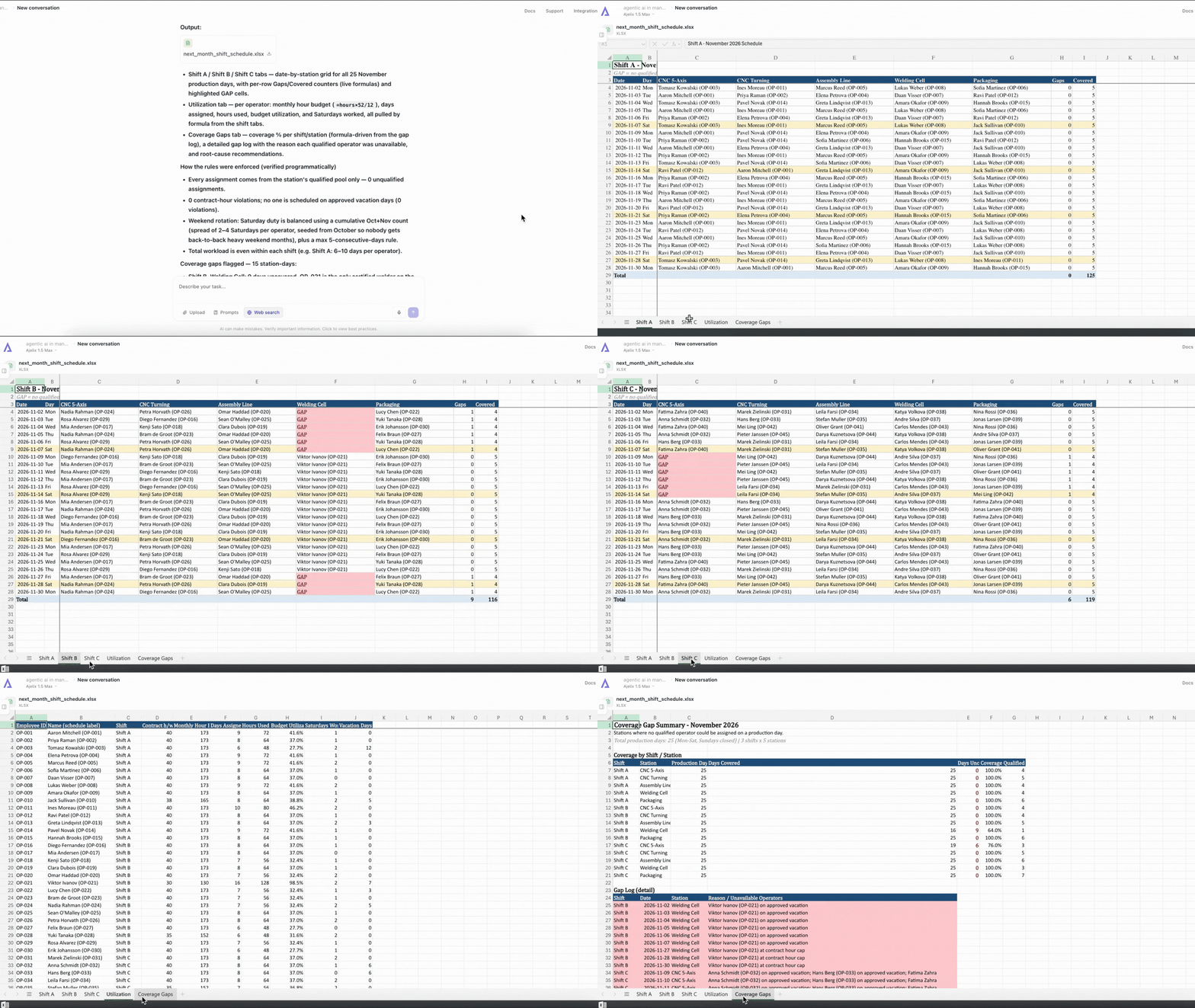
The planner gets a schedule draft that respects every constraint, keeps the final say, and can regenerate the whole file in minutes in case someone calls in sick.
Information Search
Engineers and back-office teams lose valuable time digging through standards, laws, and regulatory texts. Agentic research takes care of the first version, attaching sources to back up the information.
The walkthrough in Ajelix:
Upload your procedure and standards documents, then prompt:
You're a compliance research agent. Our plant is adopting EN ISO 12100 as the basis for machinery risk assessments. Summarize what changes for our documentation and labeling, list which of our uploaded procedure documents need revision, and give me the source clause for every claim you make. Flag anything you're not certain about so I can verify it against the official text.
Ajelix’s output:
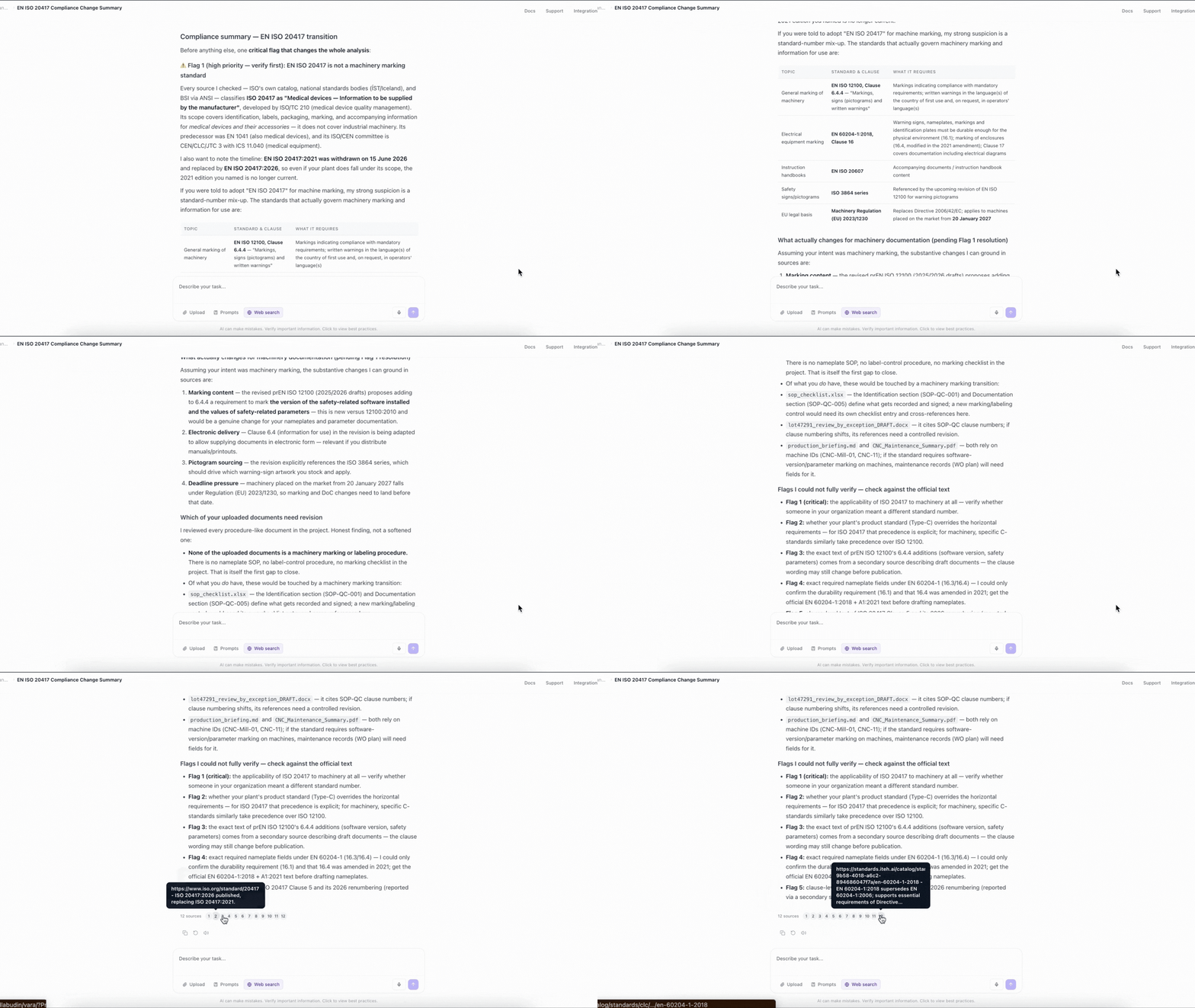
Remember to treat AI research as a draft, verify against official texts, and keep the audit trail.
How To Start
Gartner predicts that over 40% of agentic AI projects will be canceled by the end of 2027, but this isn’t about the quality of the technology. Rather, unclear ROI and weak controls might make you not trust the powerful capabilities of the AI.
Three rules that make agentic AI’s value measurable:
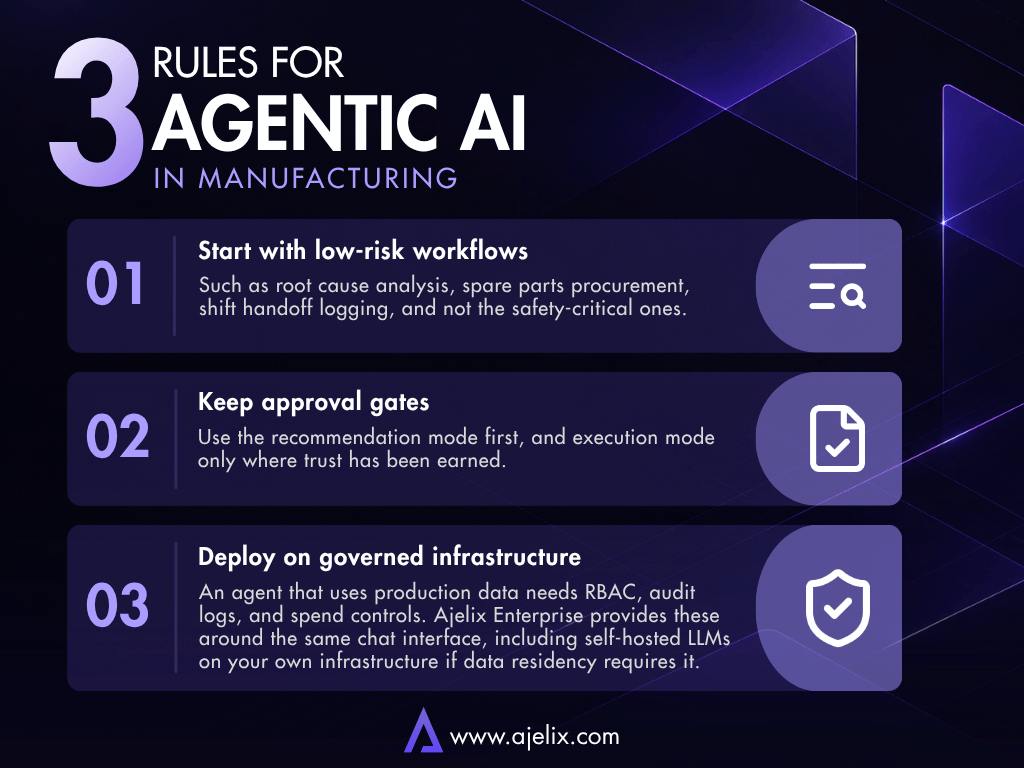
- Start with low-risk workflows, such as root cause analysis, spare parts procurement, shift handoff logging, and not the safety-critical ones.
- Keep approval gates. Use the recommendation mode first, and execution mode only where trust has been earned.
- Deploy on governed infrastructure. An agent that uses production data needs RBAC, audit logs, and spend controls. Ajelix Enterprise provides these around the same chat interface, including self-hosted LLMs on your own infrastructure if data residency requires it.
Want to learn more about how agentic AI can help your manufacturing business? Fill out the form below and contact the Ajelix team.
FAQ
Agentic AI in manufacturing is AI that observes a signal on the plant floor, plans a multi-step response, executes the steps it’s allowed to execute, and escalates to a human when confidence is low – across maintenance, quality, scheduling, and supply workflows.
Predictive maintenance work orders, defect root cause analysis, dynamic production scheduling, procurement with supplier and warehouse data control, and – in pharmaceutical manufacturing – batch record review preparation and deviation investigation. Back-office adoption focuses on workforce and shift scheduling plus standards and regulation research.
Deloitte predicts manufacturer adoption will roughly quadruple by 2027, from 6% to 24%, and production-scale agentic AI deployments report an average 171% ROI. Before the AI boom, unplanned downtime cost a typical industrial business around $125,000 per hour. With the introduction of agentic AI, predictive maintenance agents typically pay for themselves in 3-6 months.
Gartner predicts over 40% of agentic AI projects will be canceled by the end of 2027, mostly due to unclear business value and weak risk controls. But there are simple fixes to it: start with low-risk workflows, keep approval gates in recommendation mode, and deploy on governed infrastructure with permissions, audit trails, and spend controls.
Yes. The Ajelix chat interface can execute all seven processes in this article, you just upload your data, describe the workflow, and receive the deliverable. When you’re ready to scale it across teams with governance, permissions, and audit trails, you should move up to the Enterprise plan.
Agentic AI chat that helps you complete projects
AI for work that ingests, transforms, and delivers the exact deliverables your team needs, while you stay focused on strategy. No more chatting, agents can get the job done.