Top Enterprise AI Orchestration Platforms (From AI Experts)

If you’re in search of the best enterprise AI orchestration platform and landed here, you likely already know what your company needs – and you’re in good hands.
Our team of AI experts have researched and compiled a guide of the leading platforms for your consideration, with pros, cons, and business use cases.
Let’s dive right in.
What Is AI Orchestration
AI orchestration is what coordinates various AI components, such as models, agents, tools, memory and APIs, into capable multi-step workflows. While these workflows may have a human review or decision step, this coordination is mostly automated.
Let’s say you get a customer inquiry that triggers a workflow. Orchestration will:
- Trigger an agent that retrieves data from your CRM;
- Pass context to a second agent that drafts a response;
- Route it to a human for approval;
- Log the entire sequence for compliance purposes.
The orchestration layer manages sequencing, state, failure recovery, and tool access.
As for what is an enterprise AI platform, it’s a system built to deploy, manage, and scale AI capabilities across an organization. These platforms are designed specifically for the security, compliance, and integration requirements that enterprises need.
AI Orchestration vs AI Agent Orchestration vs Multi-Agent Orchestration
These three might be hard to tell apart, but have different definitions:
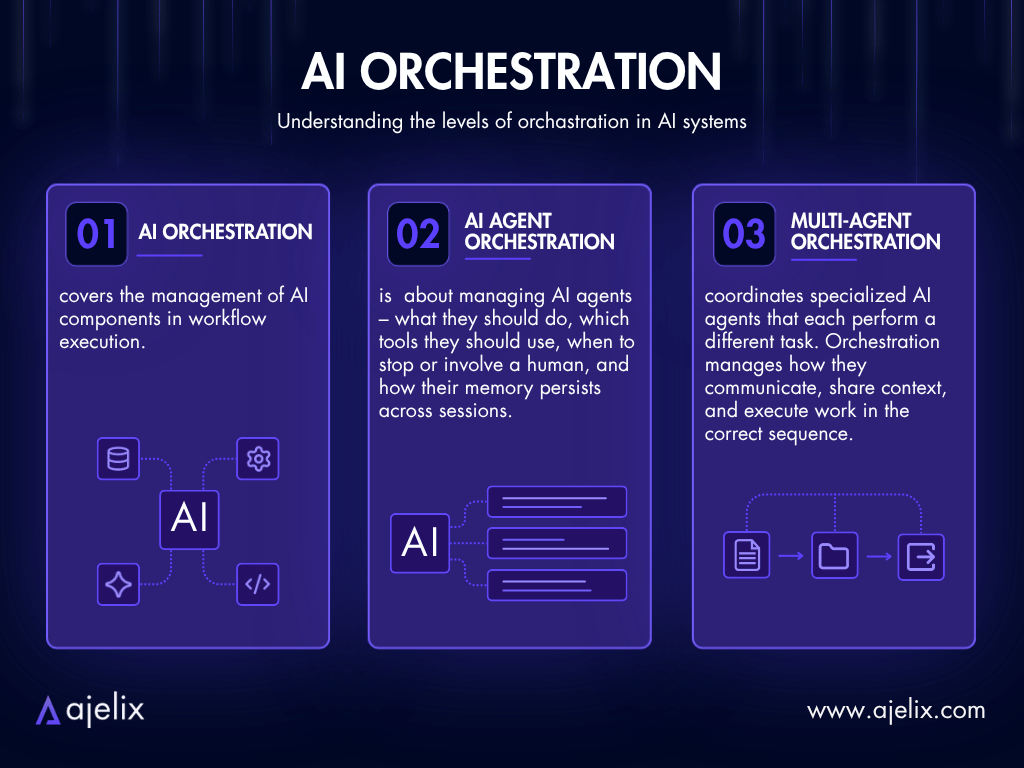
AI orchestration refers to the term in a broad sense, covering the management of AI components in workflow execution.
AI agent orchestration is specifically about managing AI agents – what they should do, which tools they should use, when to stop or involve a human, and how their memory persists across sessions.
Multi-agent orchestration refers to coordination between multiple specialized agents, each handling a different aspect of the automation. For example, one agent may handle document summarization, another classifies them, and a third deals with output generation. The orchestration manages how the agents communicate, share context and sequence work.
For enterprises, both AI agent orchestration and multi-agent orchestration are needed. The former for simpler workflows, the latter for more complex ones.
What Makes “The Best” AI Orchestration Platform: Our Criteria
To make the platform comparison fair, we evaluated each one on three criteria that matter specifically for enterprise teams:
- Multi-Agent Orchestration Capability: Can the platform coordinate multiple specialized agents, each for a different purpose, in the same workflow? Is there an orchestration layer that is capable of managing multiple agents simultaneously?
- Enterprise Governance & Security: Does the platform provide audit trails, role-based access controls and data protection? Does it offer deployment options both on-premises or in a private cloud? Does it hold all the certifications enterprises require?
- Integration Options: Does the platform connect to external tools and other platforms your team uses, either natively or through a custom API key? Can it reach CRMs, internal systems, data sources, and MCP servers?
Our core question throughout choosing the platforms was: would we recommend this to our enterprise clients?
The 5 Best Enterprise AI Orchestration Platforms
Here are the five best enterprise AI orchestration platforms, compared in a table overview:
| Platform | Multi-Agent Orchestration | Governance & Security | Integrations | Best For |
|---|---|---|---|---|
| Ajelix Enterprise | + Full multi-agent orchestration for workflow automation + Agentic AI + rules-based automation in the same flow + Shared context across agents | + Full audit trail & reasoning logs + Role-based access controls + On-premises & hybrid deployment+ Self-hosted LLM support | Connect to any systemvia custom API key. Custom connectors built to your specific processes & data sources. | Business teams & enterprises needing multi-department deployment,and flexible data hosting. |
| IBM watsonx Orchestrate | + Supervisor-worker multi-agent + Pre-built skills for SAP, Salesforce, ServiceNow + watsonx. governance control layer | + SOC 2, HIPAA, ISO 27001 + Certified air-gapped deployment + Bias detection & model explainability at inference level | Pre-built enterprise connectors for SAP, Salesforce, ServiceNow, and others. Primarily IBM ecosystem; fewer third-party native integrations outside it. | Regulated industries.Teams where every AI decisionmust be traceable & defensible. |
| Microsoft Foundry | + Agent365 governs agents across departments | + Entra Agent ID for agent identity + Enterprise data protection- Azure-only; no multi-cloud | Native: Teams, SharePoint, Dynamics 365, M365 Copilot, Azure Active Directory. 1,700+ model catalog. Limited outside Microsoft ecosystem. | Enterprises already using Azure and Microsoft 365. |
| Google Gemini Enterprise Agent Platform | + Multi-agent coordination patterns + Visual (ADK) + code-based agent building | + Observability dashboards + Basic RBAC and IAM controls- Platform-locked to GCP – Fewer enterprise audit options than IBM or Ajelix | Native: BigQuery, Google Workspace,Google Search (real-time results). Strong for GCP-native stacks. Limited connectivity outside the Google Cloud environment. | GCP-native data teams running ML-heavy or RAG workloads, especially with BigQuery or Google Workspace as core stack. |
| LangGraph | + Best graph-based orchestration for complex stateful workflows | – No out-of-the-box governance control plane – No RBAC console, certifications, or pre-built audit dashboards + LangSmith for tracing & observability (separate tool) | Full LangChain ecosystem: 100+ integrations including OpenAI, Anthropic, Hugging Face, databases, vector stores, APIs. Model-agnostic. No no-code UI. | Engineering-led teams needing exact control over agent state, branching logic, and failure recovery. Requires dev ownership. |
Some immediate insights from the table:
- All platforms on this list offer multi-agent orchestration, but the technical expertise needed is different. Ajelix and Microsoft Foundry are designed so business teams can build and manage workflows. IBM typically requires professional services to get running. LangGraph requires engineering.
- IBM scores highest on governance but its integrations are anchored to the IBM ecosystem. Microsoft Foundry has strong identity and data protection but is only a good fit if you’re already using Azure and M365. Google is largely bound to GCP. The exception is Ajelix, which combines full audit trail and on-premises deployment with the possibility to connect to any system via a custom API key.
- Microsoft Foundry is Azure. Google Gemini is GCP. IBM is best for its own ecosystem. Only Ajelix and LangGraph give you deployment flexibility.
Below, we cover what the enterprise AI orchestration platforms do well, what not so much, and who they’re built for.
1. Ajelix Enterprise
Who is it for? Business teams and enterprises that need AI agents built around their specific workflows, with full control over data, access, and deployment environment, regardless of industry.
- Pros: Their Enterprise plan is fully enterprise-compliant with granular RBAC, full audit trail and reasoning logs, usage monitoring and quota management. Offers custom agents and connectors, and the options to self-host LLMs and connect to any third-party API. Multi-agent orchestration happens through workflows and agents can trigger other workflows autonomously.
- Cons: Run by a smaller team than giants like Microsoft and Google.
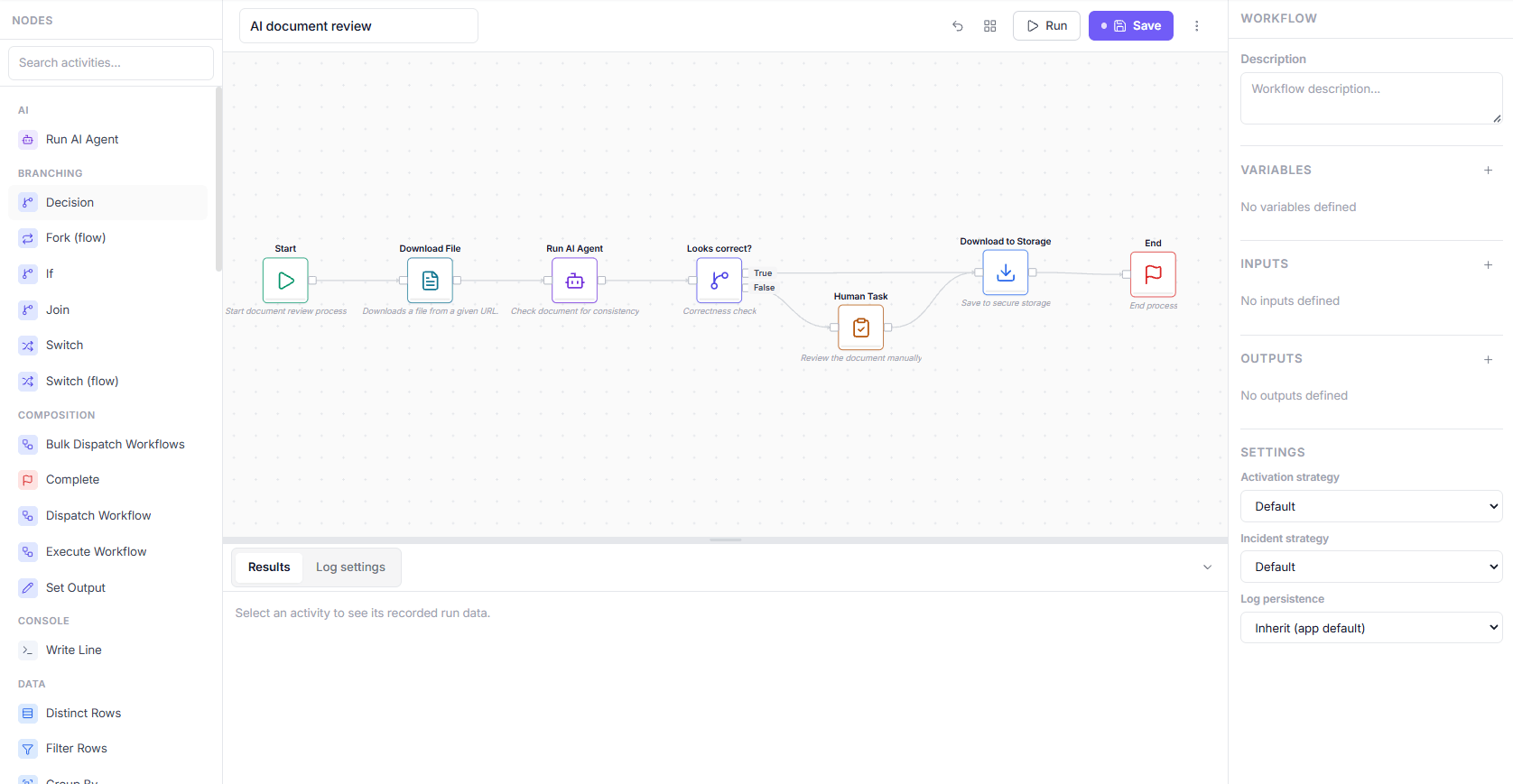
Ajelix Enterprise offers AI agent orchestration through their Workflow Builder. Agentic AI and rules-based automation operate together in the same workflow, and agent-level guardrails, including PII guardrails, define what each agent is and isn’t permitted to do.
The platform is designed as an operational control layer. Granular role-based access keeps employees within their permissions, while a complete audit trail records every agent and employee action. Usage monitoring with quota management keeps deployment under organizational control.
Custom agents and connectors are built around the company’s specific processes, with a RAG system trained on company documentation, so agents abide by the organization’s own standards and knowledge.
Ajelix offers the options to self-host your own LLMs, ready to deploy on kubernetes, and connect to any third-party source easily through an API key (including any LLM provider). The team works with each client independently to customize workflows and make the organization AI-native.
Pricing is a transparent custom enterprise contract, tailored to team size and the scope of the deployment. Contact the team for a quote.
2. IBM watsonx Orchestrate
Who is it for? Regulated enterprises that need AI agents embedded in multi-system workflows with the needed governance and compliance.
- Pros: Multi-agent orchestration with supervisor-worker architecture; provides bias detection and model explainability; connects to 700+ enterprise systems; offers pre-built agents for SAP, Salesforce, ServiceNow, HR, procurement, and sales.
- Cons: Onboarding is complex; advanced multi-agent configuration requires IBM professional services.
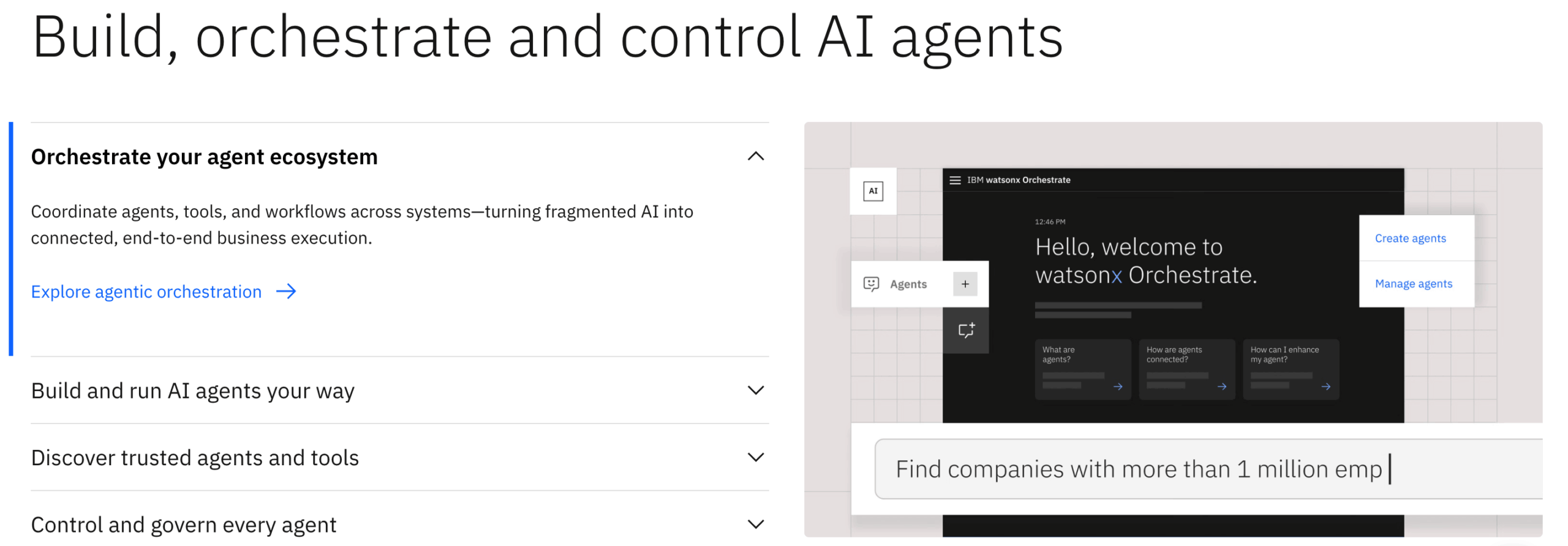
Orchestrate brings an entire agent ecosystem into one managed layer, so teams can see what every agent is doing, enforce policies, and develop what’s working even further.
When it comes to orchestration, an orchestrator agent routes work to specialized sub-agents, each of which has its own tools, memory and scope. The platform manages sequencing, failure handling, and multi-step workflows.
Every agent action can be traced through watsonx.governance, IBM’s unified control layer for model monitoring, bias detection, and policy enforcement.
Full enterprise deployments are quote-based.
3. Microsoft Foundry
Who is it for? Enterprises already using Azure and Microsoft 365 who want to deploy production AI agents on the same platform.
- Pros: Native integrations with Teams, SharePoint, Dynamics 365, and M365 Copilot; impressive model catalog, including GPT-5 and Claude; Entra Agent ID manages identity and access for every agent; two orchestration modes.
- Cons: Locked to Azure; no multi-cloud or standalone deployment option; Consumption-based pricing can be unpredictable; overlapping product features regularly creates confusion about which tool handles which task.
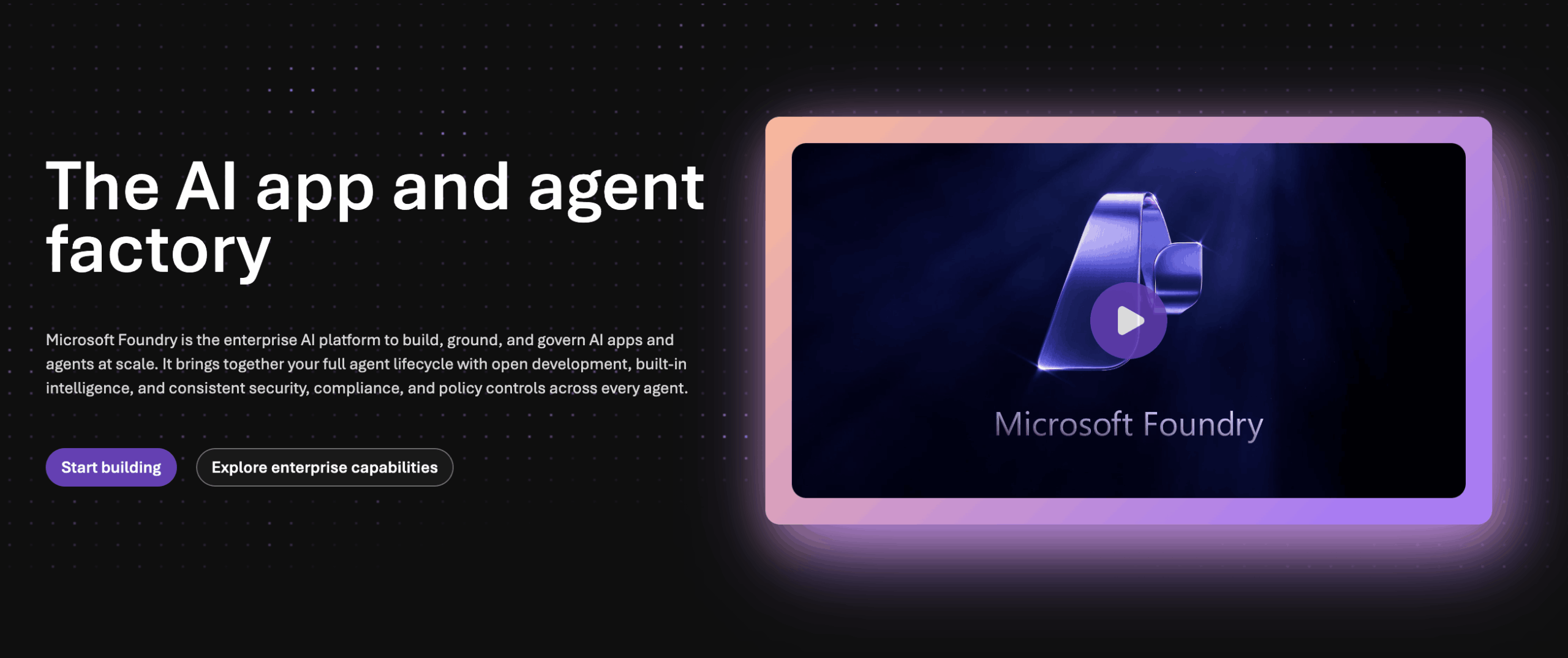
Microsoft Foundry supports two orchestration modes: LLM-driven, where a planning agent figures out which specialized agents to involve, and a deterministic workflow orchestration, where routing is defined by code. Foundry offers Agent-to-Agent, which means agents can coordinate with agents on other AI platforms, such as LangGraph, CrewAI or OpenAI.
When a company uses Microsoft, every employee gets an account in Entra (Microsoft’s identity system), which controls who can access what, what permissions they have, and what gets logged. The same Entra system is used for Foundry’s AI agents.
Foundry IQ acts as a unified knowledge and retrieval layer, grounding agents in enterprise data sources. The model catalog includes thousands of models.
For organizations using Microsoft, Foundry is a logical step for enterprise AI implementation. Pricing is consumption-based.
4. Google Gemini Enterprise Agent Platform
Who is it for? Google Cloud-established engineering teams that want the most model choices available.
- Pros: 200+ models available; agents can communicate with each other natively; multi-agent coordination patterns supported across single, hierarchical, and parallel architectures.
- Cons: Locked to GCP; the no-code Agent Designer handles simpler workflows, but anything involving multi-step reasoning, custom data pipelines, or external API orchestration involves code engineering.
Gemini allows you to build, scale, govern and optimize agents through four core processes:
- Agent Studio for designing, testing, and managing agents and prompts visually;
- Agent Development Kit for programmers using code to build custom agents;
- Model Garden with 200+ models including Gemini, Claude and Gemma;
- Antigravity app for orchestrating agents that can run multi-agent workflows.
Multi-agent orchestration is supported through the ADK, covering single, multi-agent, and hierarchical architectures. Their strongest capability is RAG and data grounding. Agents can be grounded in BigQuery data, Google Workspace documents, and real-time Google Search results, which reduces hallucination.
The platform supports both visual and code-based agent building, which covers a range of skill levels ranging from data scientist to non-technical business user.
Pricing is consumption-based on Google Cloud Platform.
5. LangGraph
Who is it for? Engineering teams that need code-level control over a multi-agent system, branching logic, and failure recovery.
- Pros: Graph-based execution makes agent logic explicit, auditable, and easy to debug; human-in-the-loop interruptions and checkpointing; no vendor lock-in; 100+ integrations, model-agnostic.
- Cons: All compliance and security architecture must be custom-built; no visual builder; requires tech expertise; long implementation.
LangGraph is an open-source orchestration framework, not a managed platform. It provides basics for building graph-based agent workflows, but every deployment decision, governance control, and compliance architecture is your team’s responsibility to implement.
Human-in-the-loop (HITL) nodes pause the graph and require human approval before continuing. A failed agent resumes from the last successful node, not from the beginning. Time-travel debugging allows developers to replay any session step-by-step, which supports audit requirements.
Supports single agent, multi-agent, hierarchical supervisor-worker orchestration. The LangChain ecosystem provides 100+ integrations with model providers (OpenAI, Anthropic, Mistral, etc.), databases, vector stores, and APIs. As LangGraph is model-agnostic, it can be used with any LLM model.
The LangGraph framework itself is free, but the platform’s pricing model is seat-based.
Choose The Right Platform For Your Business Needs
The right platform depends on your existing infrastructure, your industry, your technical manpower, and how your teams work currently. Match your situation to the use cases below.
| “I need an enterprise AI platform that has custom agents and connectors built around my company’s specific workflows, a RAG system trained on our documentation, granular role-based access, a full audit trail, and the option to self-host our own LLM.”→ Ajelix Enterprise. Custom agents and connectors are built around your company’s specific processes, with a RAG system trained on your documentation so agents follow your own standards. Granular role-based access, a full audit trail for every agent and employee action, and usage monitoring with quota management keep the platform under your control. Ajelix supports self-hosted LLMs and connects to any third-party system that offers an API key. The team works with clients independently to make the organization AI-native, regardless of industry. |
| “My organization operates in a regulated industry, and every AI decision needs to be traceable, explainable, and defensible to auditors.”→ IBM watsonx Orchestrate. Orchestrate’s multi-agent architecture runs atop watsonx.governance, which provides bias detection and model explainability. Offers a certified air-gapped deployment option. Pre-built agents for SAP, Salesforce, ServiceNow, HR, procurement, and finance workflows reduce the time to compliance-grade production. Best for enterprises that treat auditability as a procurement requirement. |
| “My company already runs on Azure and Microsoft 365. I want to deploy AI agents inside the tools my employees already use, with governance and identity managed through the same infrastructure we already have.”→ Microsoft Foundry. Foundry integrates natively with Teams, SharePoint, Dynamics 365, and M365 Copilot. Every agent is provisioned with an Entra Agent ID, meaning identity, access, and permissions flow through the same system that governs human users. Two orchestration modes, LLM-driven and deterministic, operate together in one framework, and Agent-to-Agent protocol lets Foundry agents coordinate with agents on other platforms. A practical choice specifically for organizations already using Microsoft. |
| “My team is data-engineering-heavy and works primarily in Google Cloud. We need agents grounded in our BigQuery data and Google Workspace documents, and we want the widest possible choice of models.”→ Google Gemini Enterprise Agent Platform. The platform’s strongest capability is RAG and data grounding, meaning agents can pull from BigQuery, Google Workspace, and real-time Google Search results to reduce hallucination in data-intensive workflows. Model Garden offers 200+ models including Gemini 3.5, Claude, and open-source Gemma. Agent Studio handles visual, no-code agent building; the Agent Development Kit (ADK) covers code-level orchestration for engineering teams. Best for GCP-native teams with your data already inside Google Cloud. |
| “My engineering team needs code-level control over our agent workflows – branching logic, durable state, failure recovery, and human approval checkpoints – and we’re comfortable owning the full orchestration layer ourselves.”→ LangGraph. LangGraph’s graph-based execution model makes agent logic explicit and fully debuggable: nodes are agents, edges are transitions, and branching is defined in code. Human-in-the-loop interrupt nodes pause workflows for approval before continuing. Checkpointing means a failed agent resumes from its last successful step. Time-travel debugging replays any session step-by-step for audits. Open source, model-agnostic, and the full LangChain ecosystem provides 100+ integrations. Requires developer ownership. |
If Ajelix sounds like the right fit for your company, contact us.
FAQ
It’s the coordination layer that connects AI models, agents, and tools into automated multi-step workflows, deciding what runs, in what order, and what happens when something fails.
Traditional automation follows fixed, rule-based logic. AI orchestration can reason about context, route tasks dynamically, and handle situations that weren’t explicitly programmed.
IBM watsonx Orchestrate is the most purpose-built for compliance-heavy environments, offering SOC 2, HIPAA, and ISO 27001 certifications, bias detection, and certified air-gapped deployment. Ajelix Enterprise is also a strong fit, particularly for organizations that need on-premises or hybrid deployment with full audit trails.
It depends on the platform. Ajelix Enterprise and Microsoft Foundry are designed for business teams to operate. IBM typically requires professional services for advanced configurations. LangGraph requires full developer ownership.
Foundry is the infrastructure platform for building and deploying custom AI agents. Copilot is a user-facing product built on top of it. If your team needs to build custom agents and workflows, Foundry is the relevant product.
Yes, though the depth varies. Microsoft Foundry and Google connect natively to their own ecosystems (M365 and GCP respectively). IBM has pre-built connectors for 700+ enterprise systems. Ajelix connects to any third-party system through an API key, with custom connectors built to your specific processes. LangGraph supports 100+ integrations through the LangChain ecosystem.
It’s in production at large enterprises, such as Klarna, LinkedIn, Uber, Workday, so yes, but with conditions. It suits engineering-led teams that need precise control over agent logic and are prepared to own the full deployment and governance layer. Organizations without technical capacity should consider a managed platform instead.
Agentic AI chat that helps you complete projects
AI for work that ingests, transforms, and delivers the exact deliverables your team needs, while you stay focused on strategy. No more chatting, agents can get the job done.