What AI Studies Say About Agentic AI ROI & Stats (And What They Don’t)
Two research firms surveyed thousands of executives about AI returns in 2025. Their findings look completely contradictory. Here’s why that’s the most useful thing either of them published.
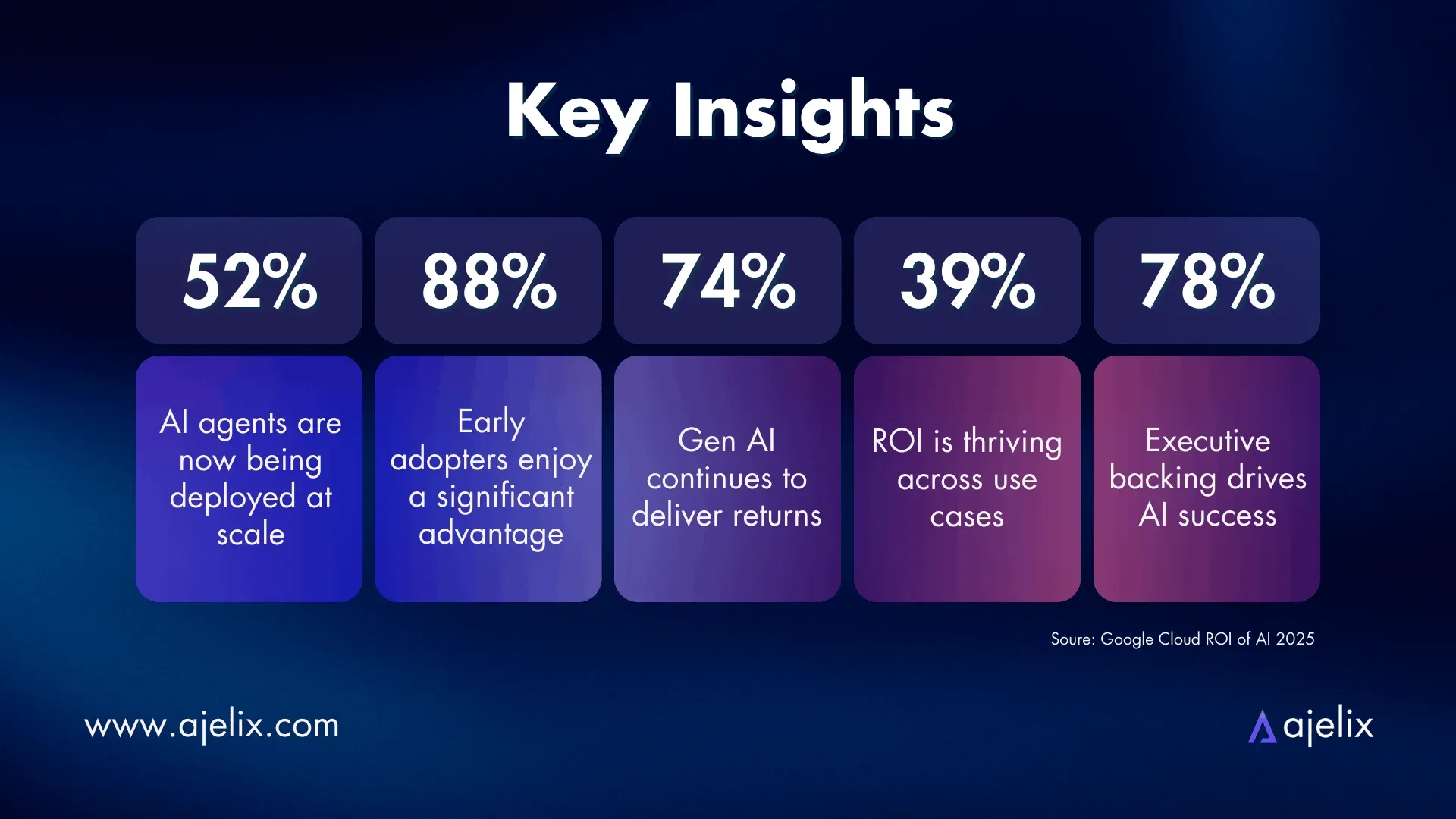
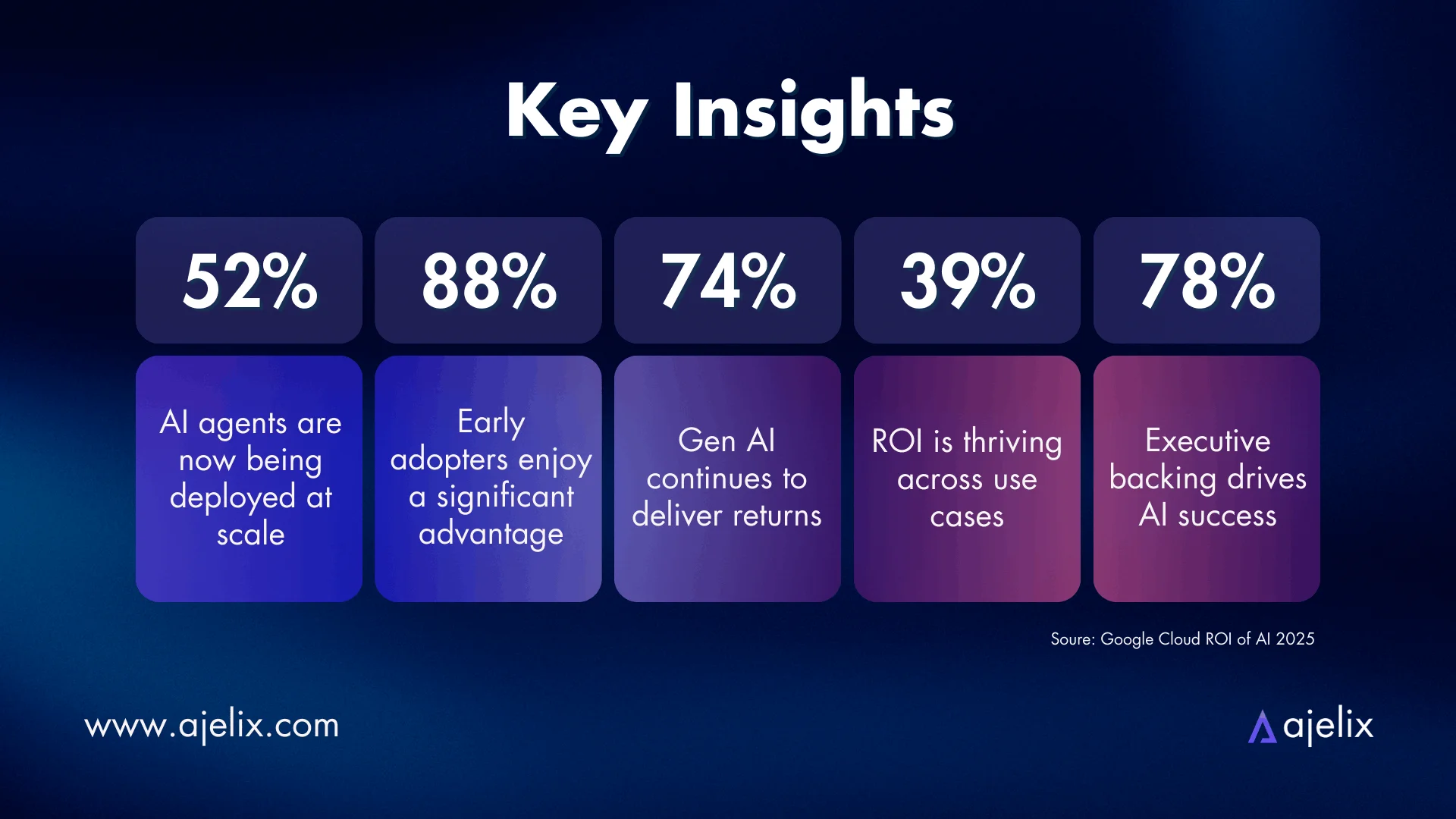
If you’ve been following AI research this year, you’ve probably seen the headline from Google Cloud’s ROI of AI 2025 report: 88% of agentic AI early adopters are now seeing a positive return on their gen AI investments. It’s a confident, momentum-building number. The kind of stat that gets shared in board decks and used to justify budget increases.
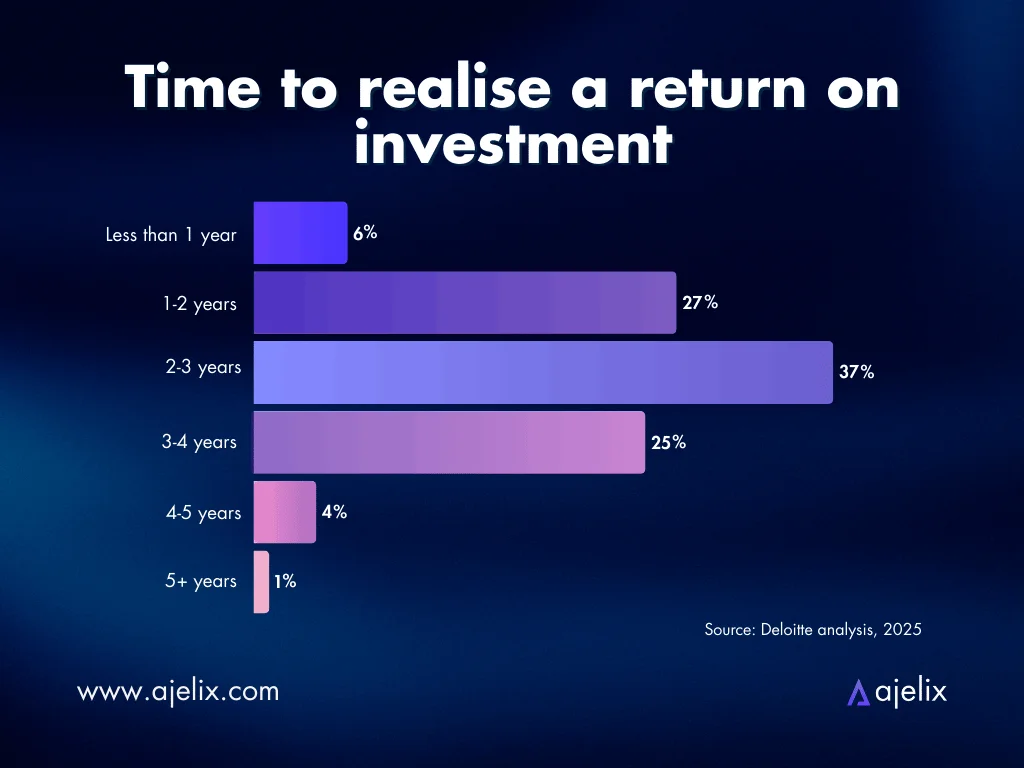
Then Deloitte published their own 2025 research surveying 1,854 executives across Europe and the Middle East, and landed on something that looks almost opposite. Their typical organization takes 2 to 4 years to achieve satisfactory ROI on an AI use case. Only 6% reported payback in under a year. For agentic AI specifically, just 10% of organizations currently see significant, measurable returns.
Same year. Both credible firms. Both surveying real executives at real companies. The numbers appear to contradict each other completely.
They don’t. And understanding why tells you more about where AI ROI comes from than either study does on its own.
Why Both Studies Are Telling the Truth
The first thing worth acknowledging is that these two reports were not measuring the same thing, in the same places, with the same definitions.
Google Cloud surveyed 3,466 senior leaders globally, with over 1,000 respondents from the United States alone. Their sample was exclusively drawn from organizations already using gen AI in production. They asked whether organizations had seen ROI on “at least one gen AI use case,” which is a deliberately low bar. It doesn’t require every initiative to pay off, just one.
Deloitte surveyed executives almost entirely across Europe and the Middle East, regions that face significantly stricter regulatory environments, more conservative risk cultures, and historically slower technology adoption cycles than North America. Their definition of ROI was more demanding: significant, measurable financial returns, not just directional improvement on a single project.
So Google Cloud found the most optimistic cohort, early movers, US-heavy, asking a permissive question, and reported their results. Deloitte found a broader, more cautious population and asked a harder question. Both are accurate snapshots of real organizations. They’re just snapshots of different rooms.
There’s also an incentive worth naming honestly. Google Cloud sells the infrastructure that agentic AI runs on. A report that says “early adopters are winning big” is functionally a sales document, even when the underlying data is real. Deloitte sells transformation consulting. A report that says “this is harder and slower than you think, and you need expert guidance” is equally self-serving. Neither invalidates their findings, but both are worth holding in mind when reading the headlines.
The Number Neither Report Is Promoting
Here’s where it gets interesting. Strip away the incentive structures and the geographic differences, and both studies converge on the same underlying finding. They just don’t headline it.
Google Cloud’s data shows that among all executives, not just early adopters, only 39% report seeing ROI now on individual productivity use cases. For customer experience, it’s 37%. For sales and marketing, it’s 33%. They’re a minority of organizations, even among those already using AI in production.

Deloitte’s data, meanwhile, shows that their top 20% of performers, their “AI ROI Leaders”, consistently do something different from the rest. They don’t have bigger budgets or more sophisticated technology.
What sets them apart is that they focus on specific, repeatable use cases with measurable outputs, mandate AI fluency as a core skill, and treat generative AI and agentic AI as fundamentally different tools with different timelines.
The pattern that emerges when you read both reports together is consistent: ROI from AI is not distributed evenly across all use cases or all organizations. It concentrates on specific conditions. Focused scope. Clear deliverable. Measurable before-and-after. “The biggest ROI comes from human adoption that actually happens, not just technically available AI that employees route around,” adds Agnese Jaunosane, founder of Ajelix.
Where the Returns Are Materializing
Google Cloud’s report identifies five areas where AI is delivering the most consistent ROI right now: productivity, customer experience, business growth, marketing, and security. Of these, individual productivity is the most accessible entry point, 70% of executives report meaningful improvement, and it doesn’t require the kind of infrastructure overhaul that agentic workflows do.
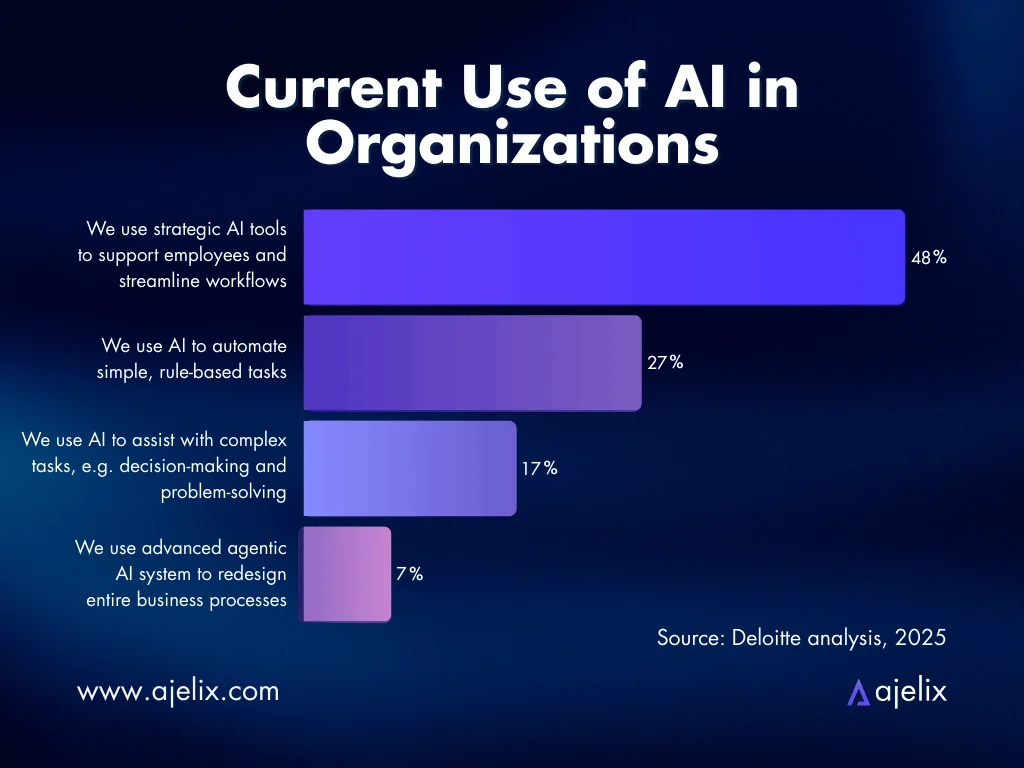
Deloitte reinforces this from a different angle. Their research notes that nearly half of surveyed organizations now use AI to streamline workflows and support employees, and that this is where confidence is highest. Not enterprise transformation. Not autonomous multi-agent systems redesigning entire processes. Supporting people in doing specific work tasks better and faster. According to the following SEO for Business Report, 30% of organizations use AI for data analysis and insights, while 20% rely on it for workflow automation.
This distinction matters more than it might appear. When executives describe productivity gains in both studies, they’re talking about concrete, task-level changes: faster data analysis, automated report generation, reduced time spent formatting and reformatting, and fewer hours lost to manual spreadsheet work. These are not glamorous use cases. But they’re the ones generating returns today.
“These are the exact same use cases we see our customers perform with agentic AI. They are usually tiring, manual administrative tasks that usually take hours or even days to perform, like reports, Excel tasks, automation script writing, analysis,” adds Arturs Jaunosans, founder of Ajelix.

Deloitte’s research found that executives struggle most to demonstrate ROI when AI is introduced alongside broader transformation efforts, because you can’t isolate AI’s contribution from everything else changing simultaneously. The clearest ROI signals come from contained deployments where the before-and-after is unambiguous: this task took four hours, now it takes twenty minutes, and nothing else changed.
The Agentic AI Gap Is Real, But It’s Not About the Technology
Both reports treat agentic AI as the next frontier, but they characterize it very differently.
Google Cloud positions it as an already-proven competitive advantage. Their early adopter cohort, organizations dedicating at least 50% of their AI budget to agents, report 88% positive ROI and have deployed more than 10 agents in production. The message is clear: move fast, go deep, the returns are there.
Deloitte is more measured. They note that only 10% of agentic AI users currently see significant ROI, and that most organizations expect returns to take one to five years. They frame agentic AI as involving “greater complexity and longer implementation timelines” and explicitly warn that organizations are often overestimating their data maturity before deploying agents into complex workflows.
Here’s what both studies are actually pointing toward, even if they express it differently: the agentic AI implementations that are working right now are not the ones attempting to redesign entire business processes from scratch. They’re the ones where AI agents have been given a specific, bounded task, one that humans were already doing repeatedly, where the output is well-defined, and where the agent’s work can be checked and used without heavy intervention.
The Google Cloud report includes a telling detail in its use case data: across all industries, the top deployed agentic AI use cases are customer service, marketing, security operations, and tech support. These are not ambiguous, open-ended workflows. They are structured, repeatable processes with clear success criteria. That’s not a coincidence.
What the Top Performers Do Differently
Deloitte’s “AI ROI Leaders”, the top 20% of performers in their study, share five characteristics worth understanding carefully, because none of them are about technology selection.
They treat AI as a business model opportunity, not an efficiency upgrade. Invest significantly more than peers (95% allocate more than 10% of their technology budget to AI, but more importantly, allocate it with clear ROI targets attached). They take a human-centered approach, with 83% believing agentic AI will free employees for more strategic work rather than replace them. Measure ROI differently for generative versus agentic AI, applying appropriate timelines to each. And they mandate AI fluency: 40% require AI training rather than making it optional.
The common thread is focus and intentionality. These organizations are not doing more AI. They’re doing more deliberate AI, on more bounded problems, with more disciplined measurement.
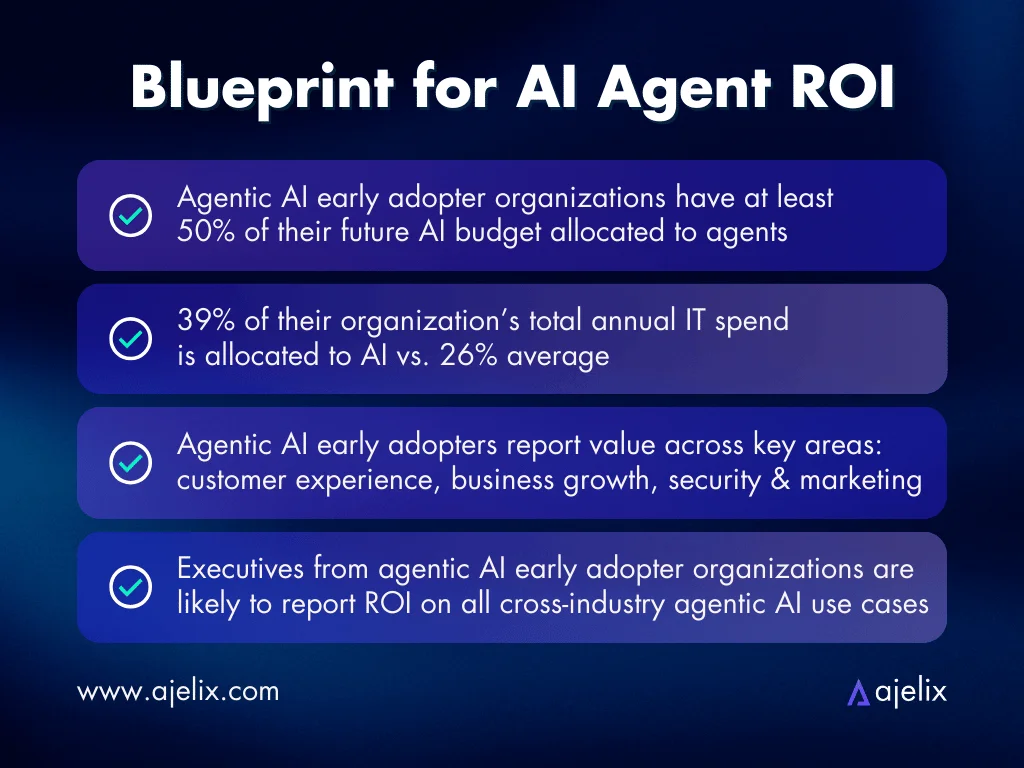
Google Cloud’s data supports this from a different angle. Their research shows that C-suite sponsorship, comprehensive executive alignment with clear objectives, correlates strongly with ROI. Organizations with that alignment report 78% ROI on at least one gen AI use case. Without it, the number drops meaningfully. But what does C-suite sponsorship actually mean in practice? It means someone senior has defined what success looks like, what the target use case is, and how returns will be measured. Which brings you back to focus.
Download the ROI Stats Report
Conclusion
There is a version of this research that gets reported as “AI is delivering massive returns” and another version that gets reported as “AI ROI remains elusive.” Both framings are available in these studies, depending on which numbers you choose to highlight.
The more useful read is this: agentic AI returns are real, and they’re materializing now, but they’re concentrating in organizations and use cases that meet specific conditions. Focused scope. Repeatable task. Measurable output. Human adoption that happens. Clear executive accountability for the result.
The organizations struggling most, in both studies, are the ones that invested broadly before investing specifically. They bought the platform before defining the workflow. They announced the AI strategy before deciding what it would do on Monday morning.
Tools that solve a specific, bounded problem rather than promising to transform everything at once are where early ROI is coming from. When our team built Ajelix, the design principle was narrow: agentic AI that completes work tasks rather than advising on them. Finance teams running month-end reports. Operations teams cleaning and structuring data. Marketing teams turning briefs into deliverables. Specific, repeatable, output-oriented workflows where before-and-after is unambiguous.
The question worth asking before your next AI investment isn’t “are we doing enough AI?” It’s: “do we have a specific task, a measurable output, and a clear definition of what success looks like?” If the answer is yes, both studies suggest the returns follow. If the answer is still “we’re building toward transformation,” the Deloitte data suggests you may be in for a longer wait than your board deck assumes.
Sources: Google Cloud ROI of AI 2025 (survey of 3,466 global senior leaders, conducted with National Research Group, fieldwork April–June 2025). Deloitte AI ROI: The Paradox of Rising Investment and Elusive Returns (survey of 1,854 executives across Europe and the Middle East, August–September 2025).
Agentic AI chat that helps you complete projects
AI for work that ingests, transforms, and delivers the exact deliverables your team needs, while you stay focused on strategy. No more chatting, agents can get the job done.